
Previously
Prologue: https://varunasok.com/2024/05/18/unraveling-uttarakhand-prologue/
Uttarakhand Diaries: Part 1: https://varunasok.com/2024/10/13/embarking-on-our-uttarakhand-adventure-from-dehradun-to-mussoories-heights/
Uttarakhand Diaries: Part 2: https://varunasok.com/2024/10/25/embarking-on-our-uttarakhand-adventure-from-serenity-to-chaos-a-journey-through-haridwar-and-rishikesh
Uttarakhand Diaries: Part 3: https://varunasok.com/2024/12/27/embarking-on-our-uttarakhand-adventure-from-rivers-to-peaks-a-journey-through-changing-landscapes/
Uttarakhand Diaries: Part 4: https://varunasok.com/2024/12/29/embarking-on-our-uttarakhand-adventure-from-snowy-summits-to-quiet-solitude-a-journey-through-auli/
April 11th, 2024
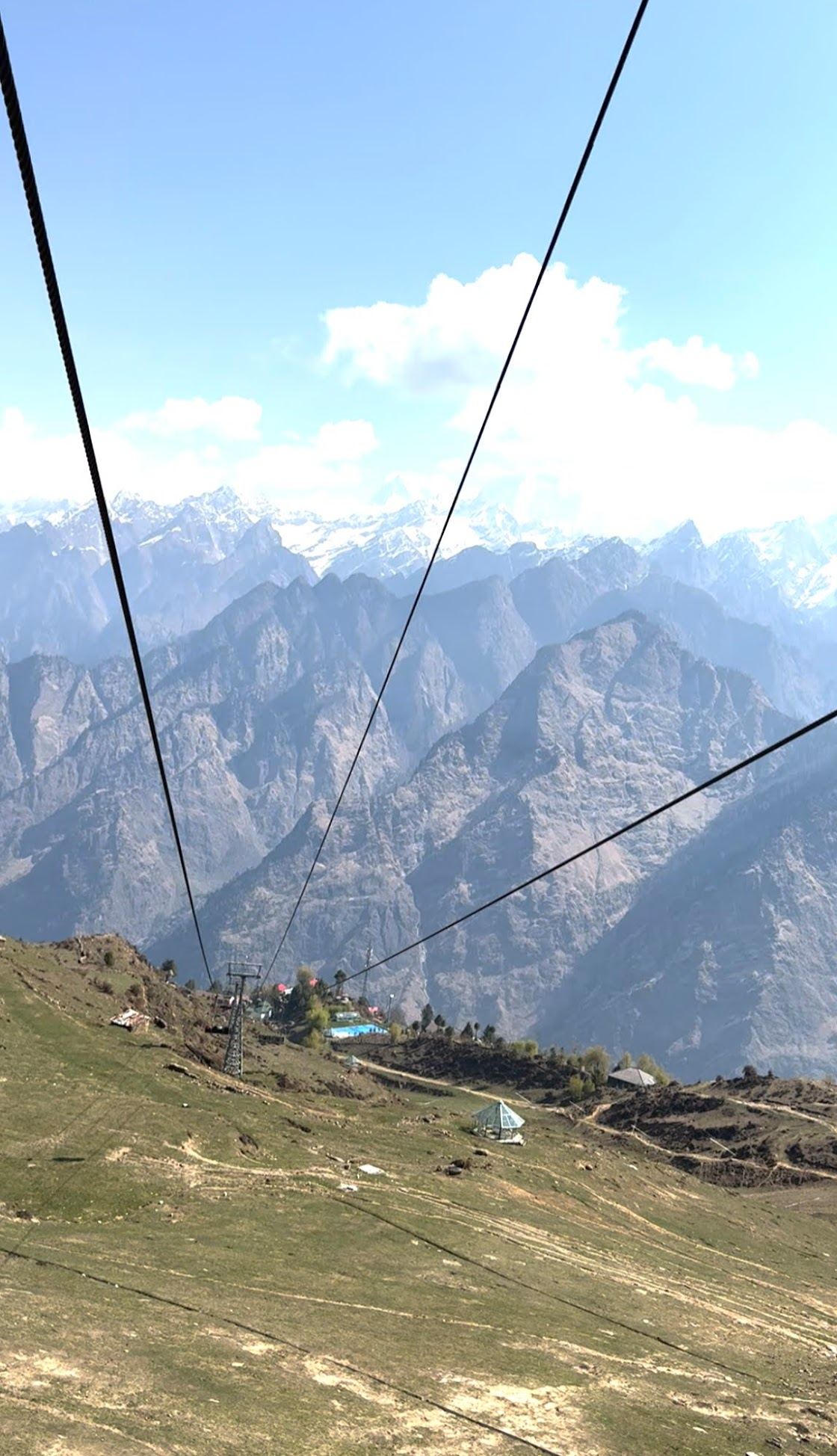
Descending from Auli on the chair car was an experience filled with anticipation, this time with my phone ready to record every moment. The journey, broken into segments supported by sturdy towers, gave us an even deeper appreciation of the terrain. With snow-draped peaks now in full view ahead of us, the ride felt like a slow-moving window into a dreamscape. The occasional sudden dips in the descent added a stomach churn, but the vistas—sheer cliffs, dense forests—kept us captivated.
Narsingh Temple
At the base, our driver awaited us, and the lively energy of Joshimath came as a stark contrast to the serene solitude of Auli. Bustling streets, clusters of people, and the unmistakable hum of activity reminded us why we enjoy visiting new places. While Auli offered tranquility, Joshimath brought us back to the vibrant rhythm of local life.
Our first stop was the Narsingh Temple, dedicated to Lord Narsingh, serves as the winter seat for the Badrinath deity when the main temple closes for the season. The grandeur of the temple lies not only in its history, believed to date back to Adi Shankaracharya, but also in its stunning setting. Towering Himalayan peaks loomed in the background, their rugged beauty magnified against the stark, barren terrain. From the temple grounds, we could see the road leading to Badrinath winding its way through the mountains.

Temple serenity meets Himalayan majesty—a picturesque backdrop blending spirituality and nature’s grandeur.
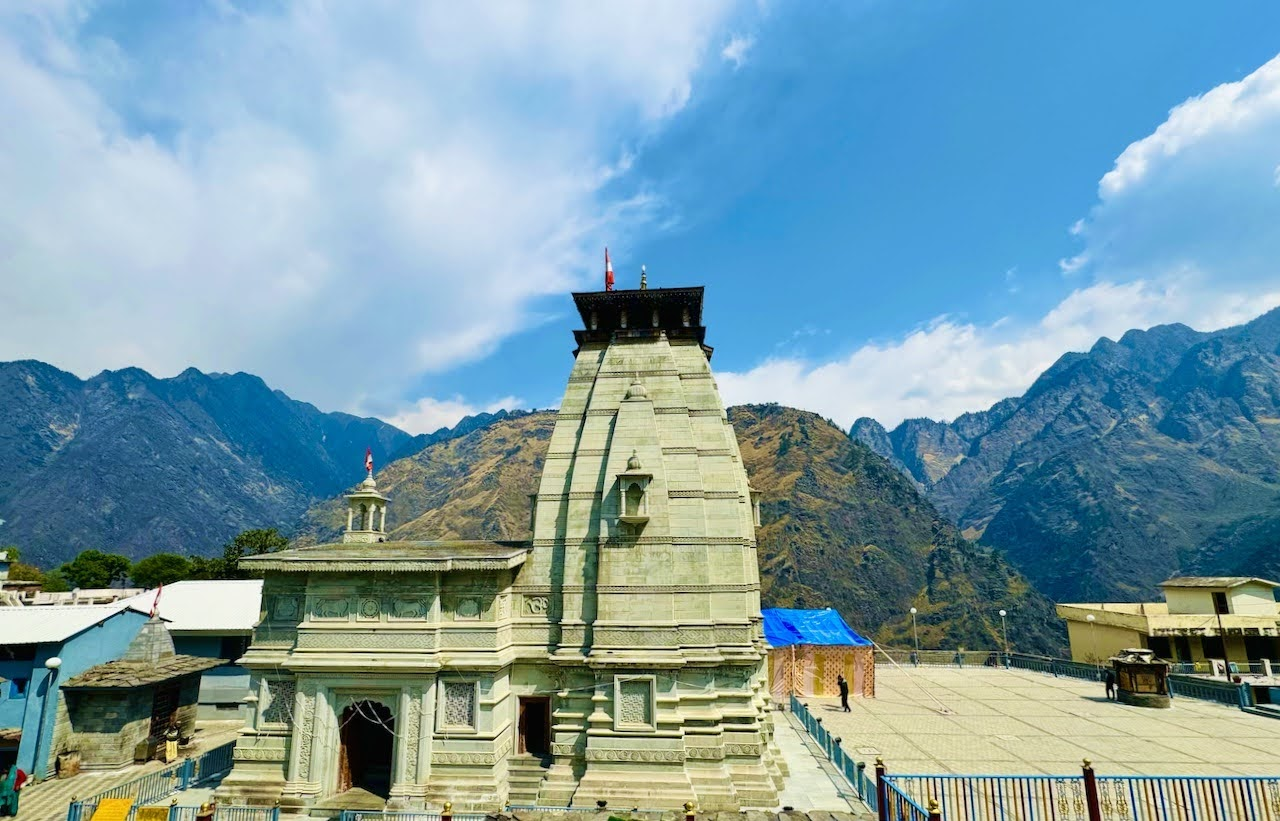
Immaculate outer grounds invite peaceful strolls

Divine nestled amidst the majestic embrace


The sacred mountains that cradle the revered Badrinath temple
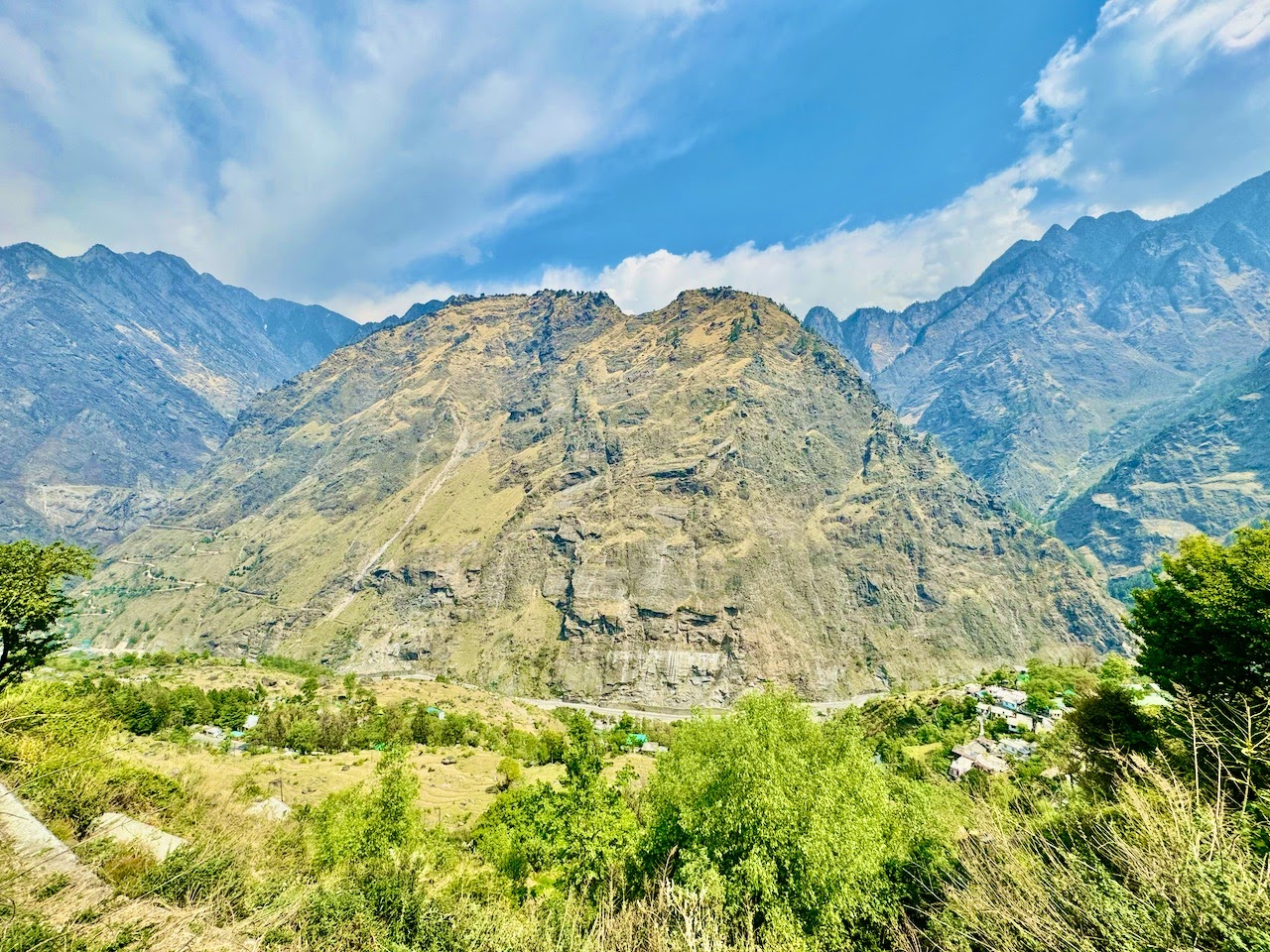
A closer view of the winding road leading to the sacred Badrinath

Amidst the bustling town, framed by snowy Badrinath peaks and vibrant homes.

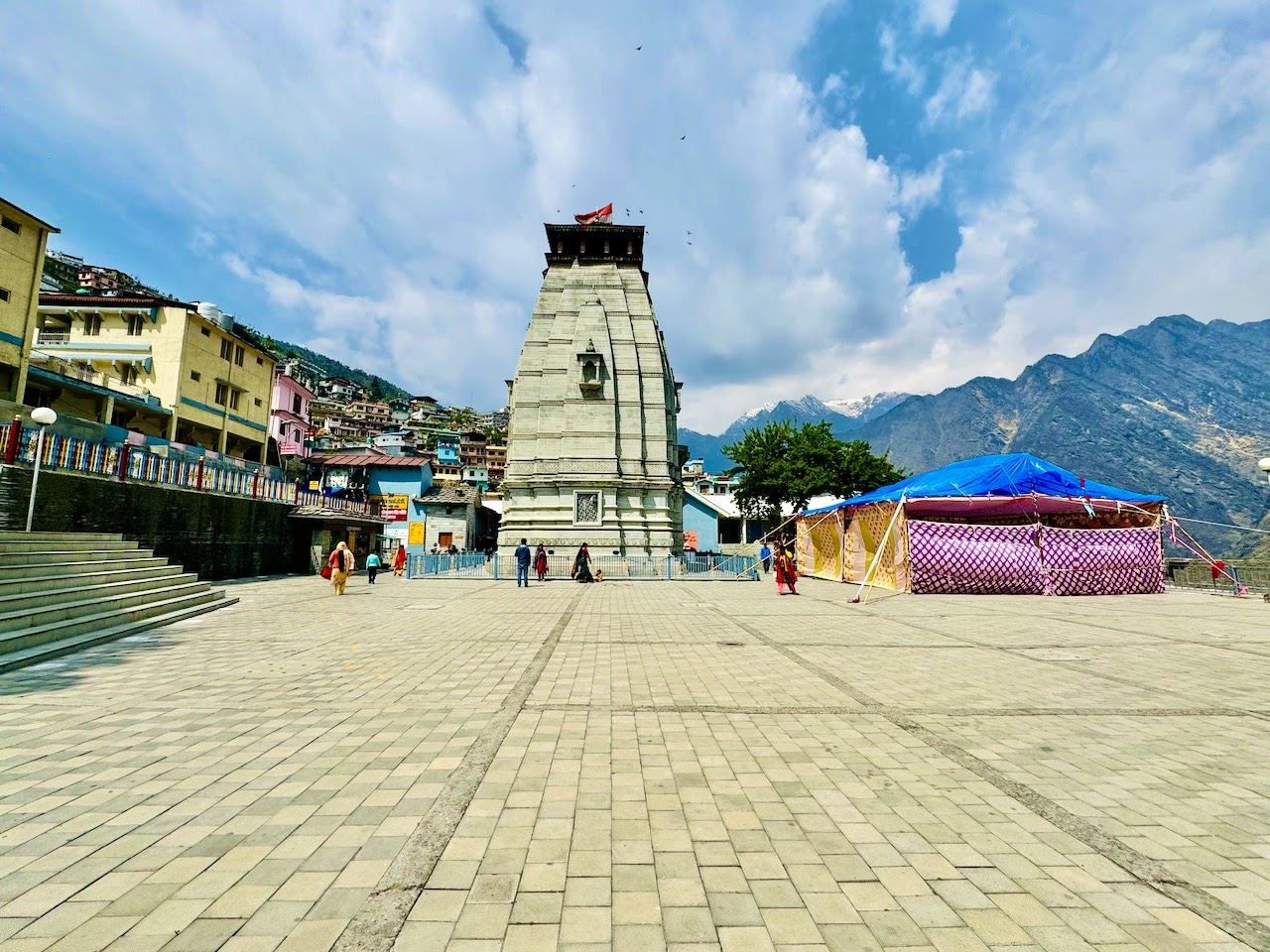
Another striking feature was the valley below, where the Alaknanda River coursed through the gorge, dividing the town and the mountains. However, the beauty of the scene was tinged with unease. Signs of the town’s land subsidence were visible everywhere—cracks in buildings and vacant hotels that once thrived with visitors now stood abandoned. We learned that many businesses had relocated to nearby towns like Pipalkoti or Auli to escape the looming danger. It was a sobering moment, underscoring the delicate balance between human habitation and the forces of nature.
Vishnuprayag
From there, we continued to Vishnuprayag, a short drive from the temple. Along the way, we passed army convoys reinforcing mountain slopes and glimpsed the massive hydroelectric project, a source of both energy and controversy in the region and finally we crossed the Alaknanda River to the other side of the mountain.
At Vishnuprayag, the confluence of the Alaknanda and Dhauliganga rivers greeted us. The two rivers, with their distinct shades of water, merged into one, creating a breathtaking swirl of currents. This sacred spot holds a significant place in Hindu mythology, as it is believed to be where Sage Narada meditated to seek the blessings of Lord Vishnu. We saw a couple stepping into the icy waters for probably a photo shoot or playing around. It’s a sight that left an impression on us, inspiring thoughts of revisiting this stretch more thoroughly one day and taking a dip in each one of these confluences.

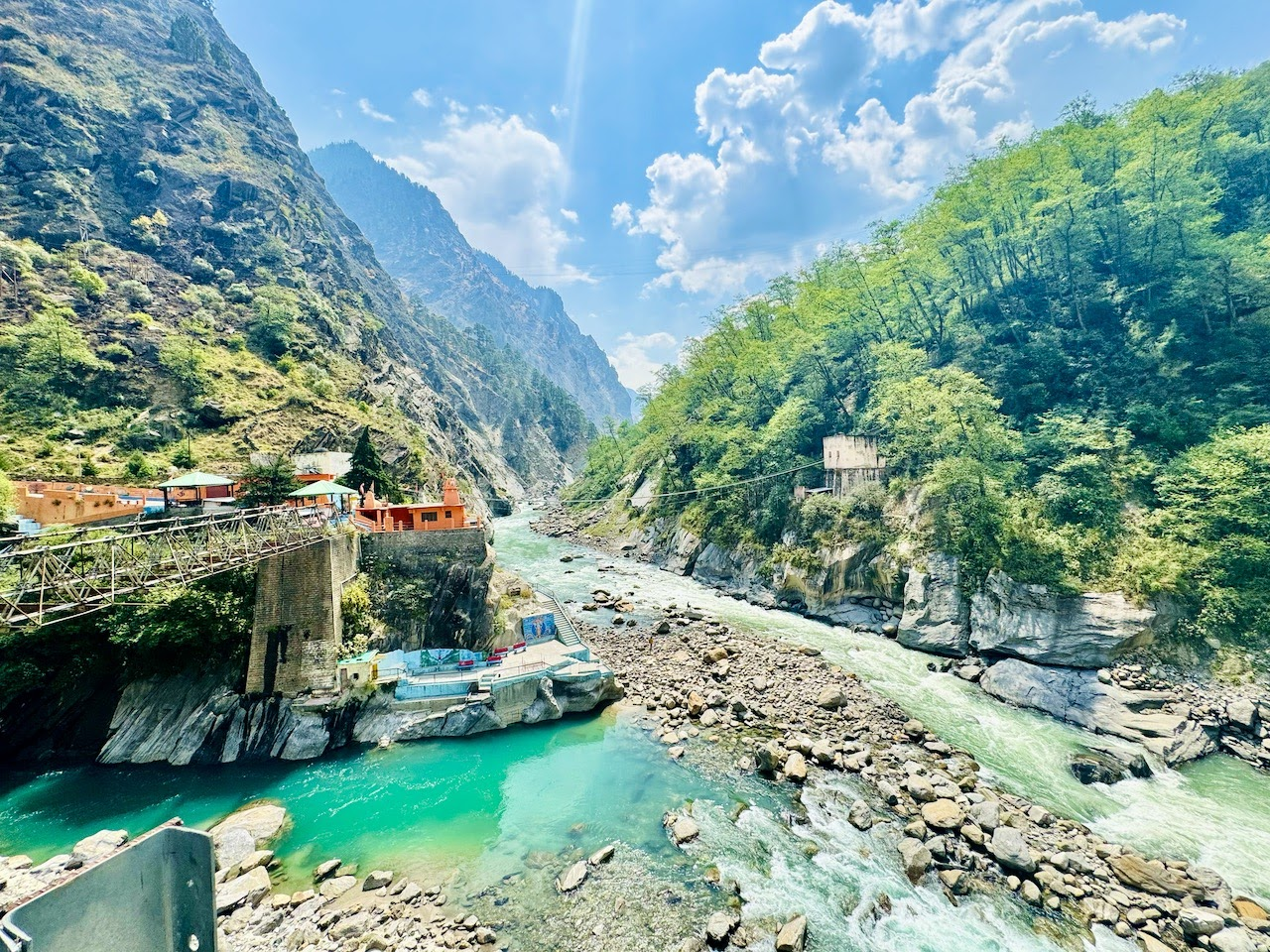
Darker one is Alaknanda and the farther lighter one is Dhauliganga
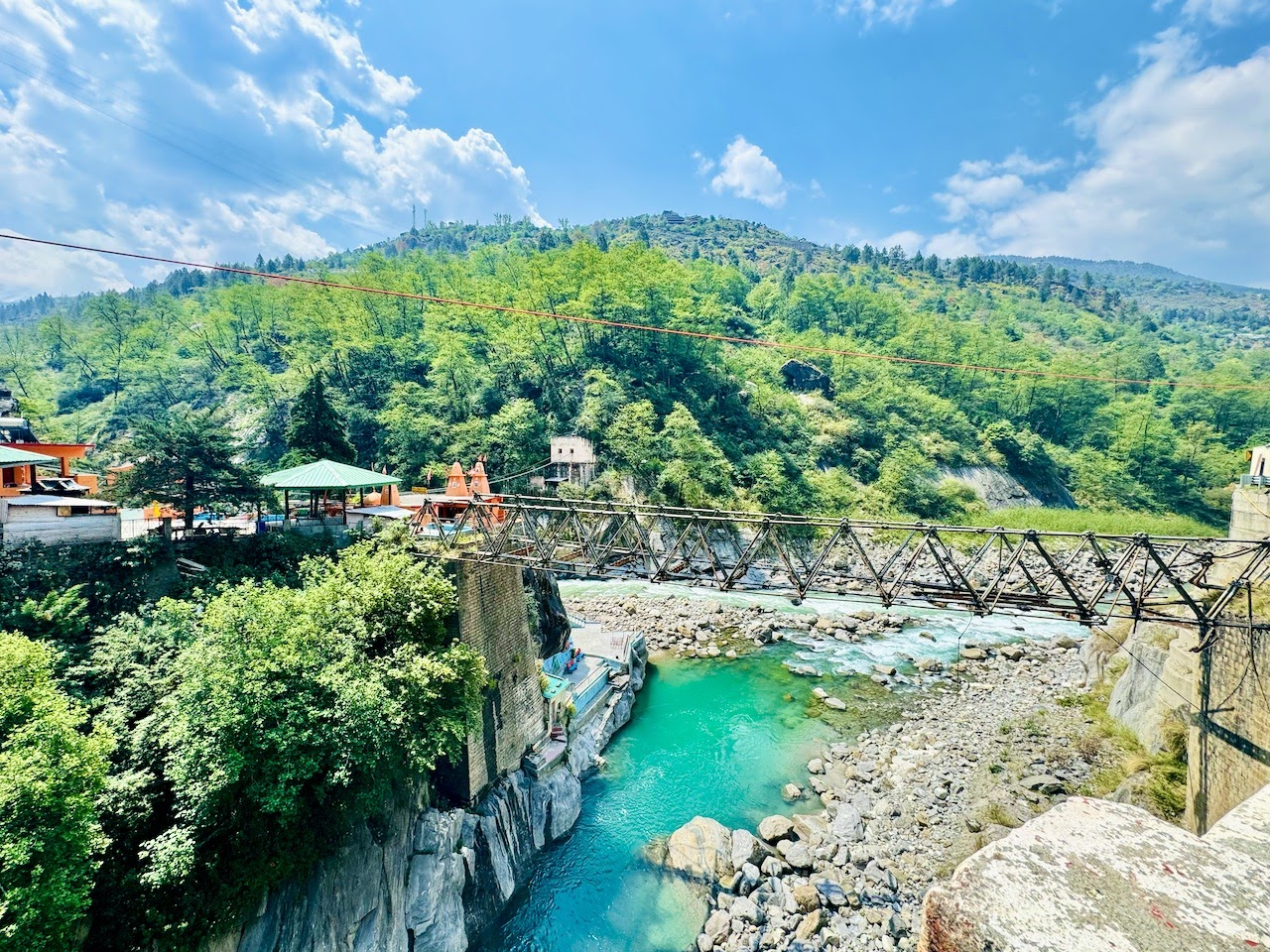
The Alaknanda and Dhauliganga rivers meet, their contrasting shades a natural marvel.

The place wherein it merges

Wide, newly laid roads to Badrinath, making the journey smoother and more accessible for travellers.

Before leaving, we paused on the bridge to take in the confluence once more. The Alaknanda, rushing with determination, seemed to embody the spirit of these mountains—unyielding, majestic, and eternal.

Adi Shankaracharya Temple
After visiting Vishnu Prayag, we made our way to the Adi Shankaracharya Temple, an iconic spiritual landmark established by Adi Jagatguru Shankaracharya and famously known as Jyotirmath. The journey to the temple itself was an adventure, as parking was unavailable, requiring us to walk from the point where our driver dropped us off. The path was a steep climb, but the effort made reaching the temple even more rewarding.
Upon entering, we were enveloped by the soothing sound of sacred chants that created an atmosphere of peace and devotion. The temple was beautifully adorned with intricate carvings and statues, glowing warmly in the light of oil lamps. The air was fragrant with the scent of incense, enhancing the serene ambiance.
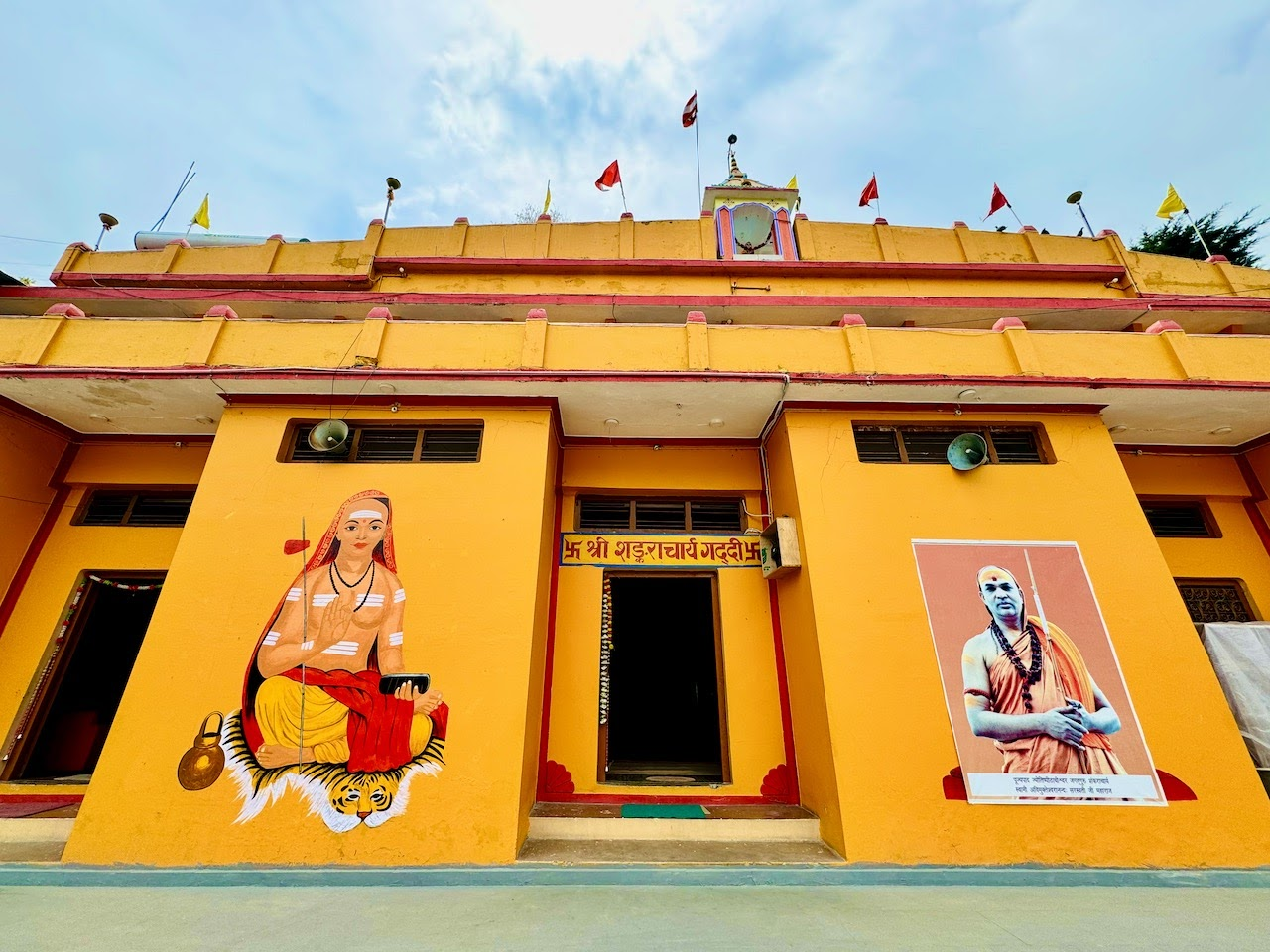
A highlight of the visit was the mystical cave within the temple, believed to be the meditation site of the great Guru himself. It was humbling to step into such a revered space.

Majestic snow-clad peaks stand tall, offering a serene view from the sacred Math.
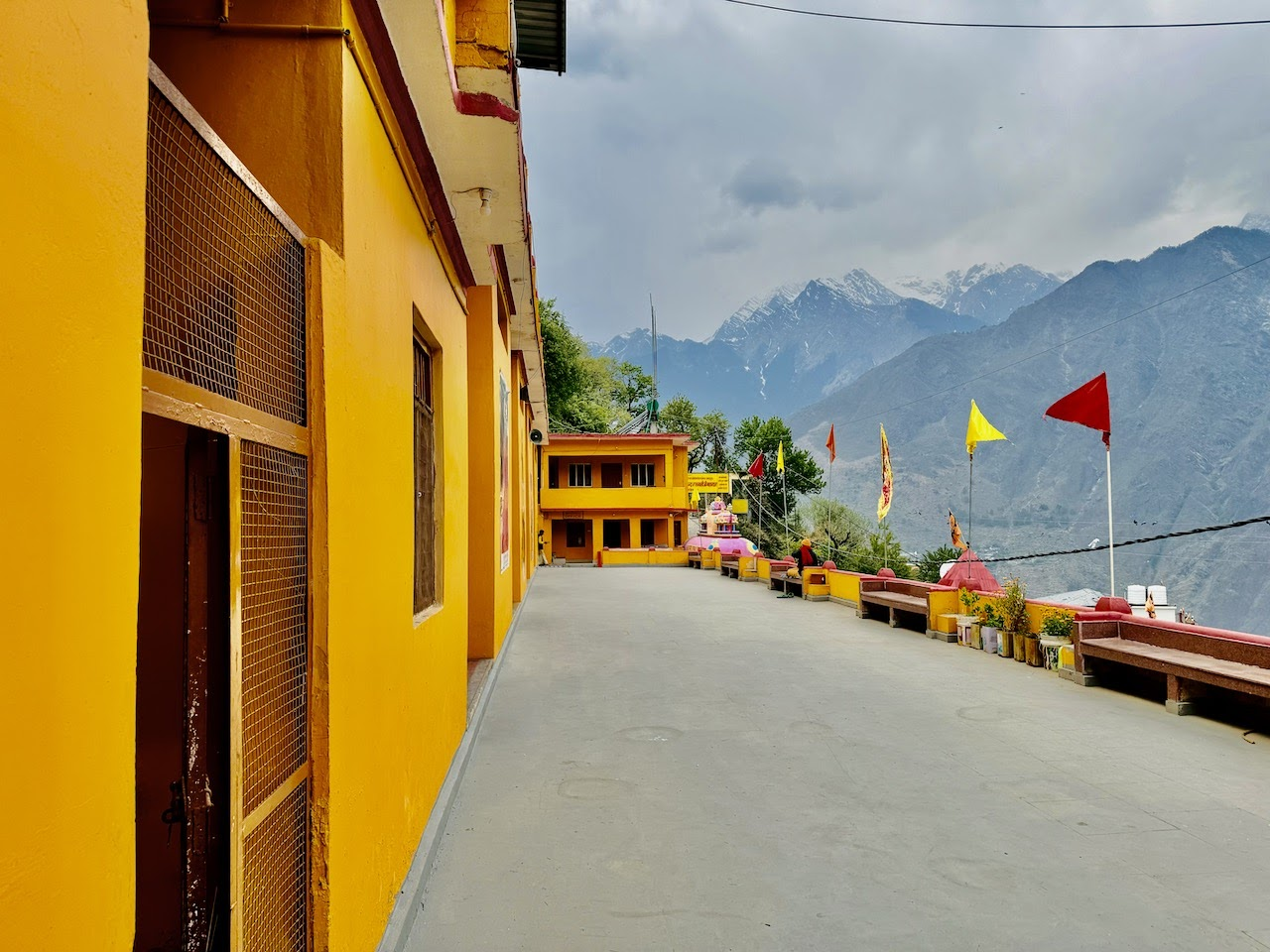
During our time there, the current head of the math noticed us and, upon learning about our journey from Bangalore and our visits to other holy sites like Puri and Dwaraka, expressed his delight. As a gesture of his appreciation, he gifted my daughter a pen, a touching memento of this spiritually enriching visit.
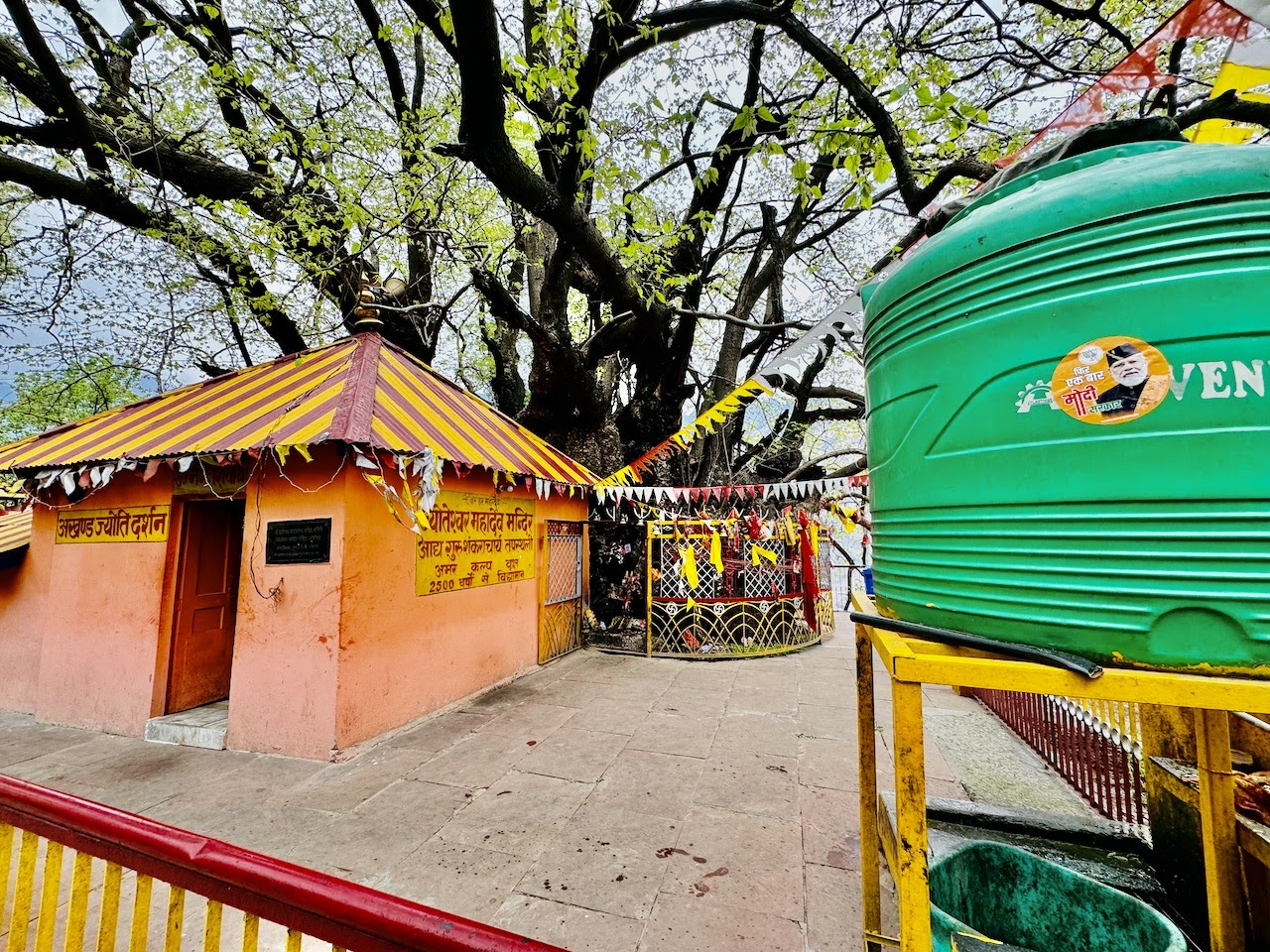
From there, we walked a short distance to the Amar Kalpavriksh, an ancient tree believed to be over 2,500 years old and imbued with mystical significance. Legend has it, under its sprawling canopy, if you whisper your heart’s deepest desires, the universe will conspire to make them come true. The tree stood tall and majestic, its aura almost tangible as we approached.


We purchased sacred threads to tie around its trunk, symbolizing our wishes and prayers. Though we were reluctant at first, a fellow devotee kindly invited us to pour sacred water over the Shiva Ling inside the sanctum, adding another layer of meaning to the experience.
With Auli and Jyotirmath behind us, we began our southward journey towards Chaukithya, where we planned to stay the night before heading to Nainital. The descent brought with it a growing appetite, so we decided to stop for lunch at Pipalkoti. However, upon arrival after about 25–30 minutes of driving, we were disheartened to find most of the shops and eateries closed. It was a bit of a letdown, as I was not keen on taking chances with just any open restaurant. Our driver reassured us that there were better options ahead, which turned out to be true when we discovered Regal Restaurant & River View Park near Nandaprayag.
Preethi and my daughter predictably went for their usual favorite, Maggi, while I opted for chapathis. What truly stood out, though, was the breathtaking view from the restaurant. Sitting there, sipping a piping-hot cup of tea, I found myself mesmerized by the Alaknanda River flowing gracefully through the gorge. It was moments like these that made the journey itself as rewarding as the destinations.
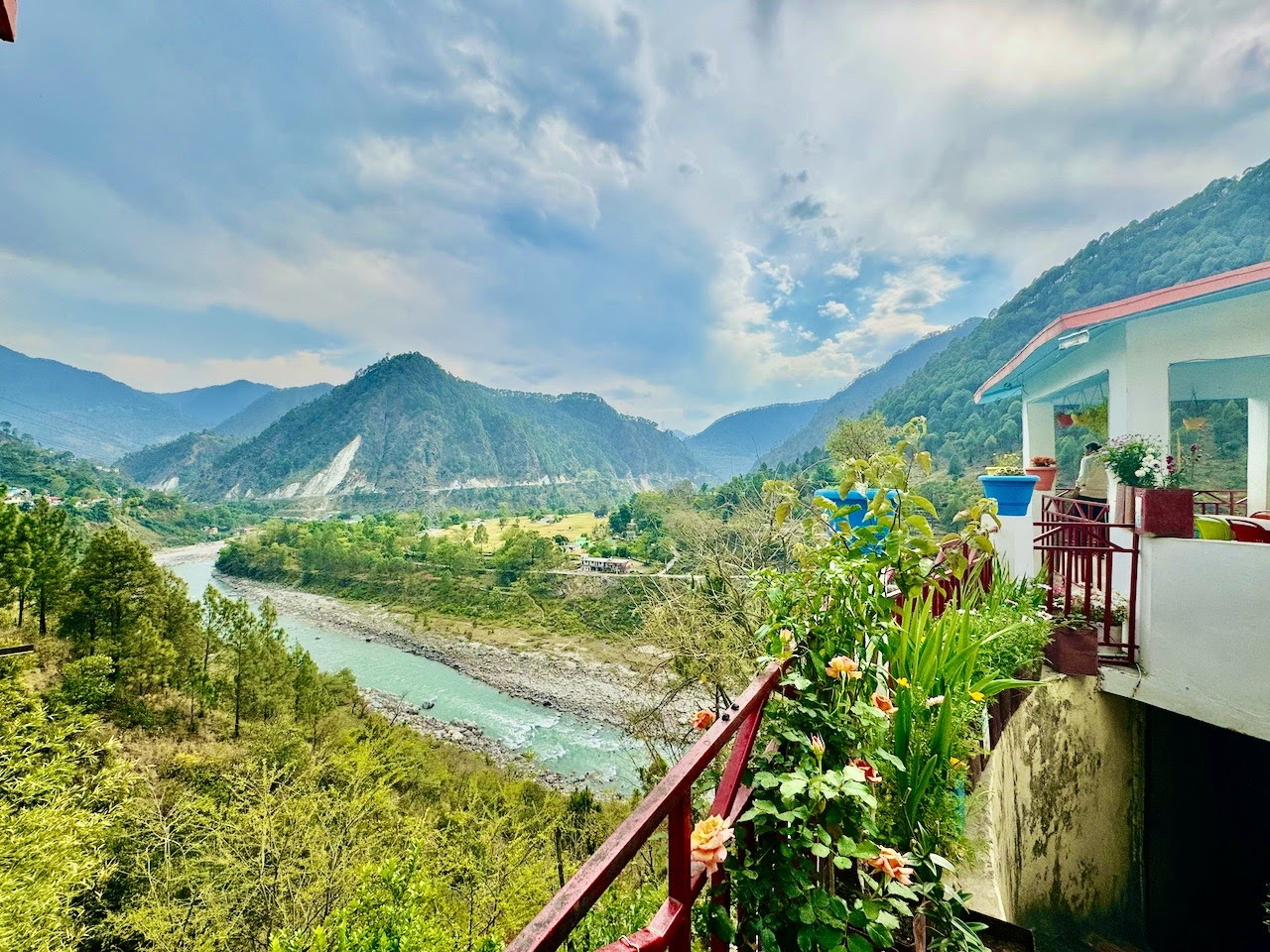
Alaknanda River gracefully snakes through mountains, gorges, valleys, and vibrant towns, creating a picturesque tapestry.
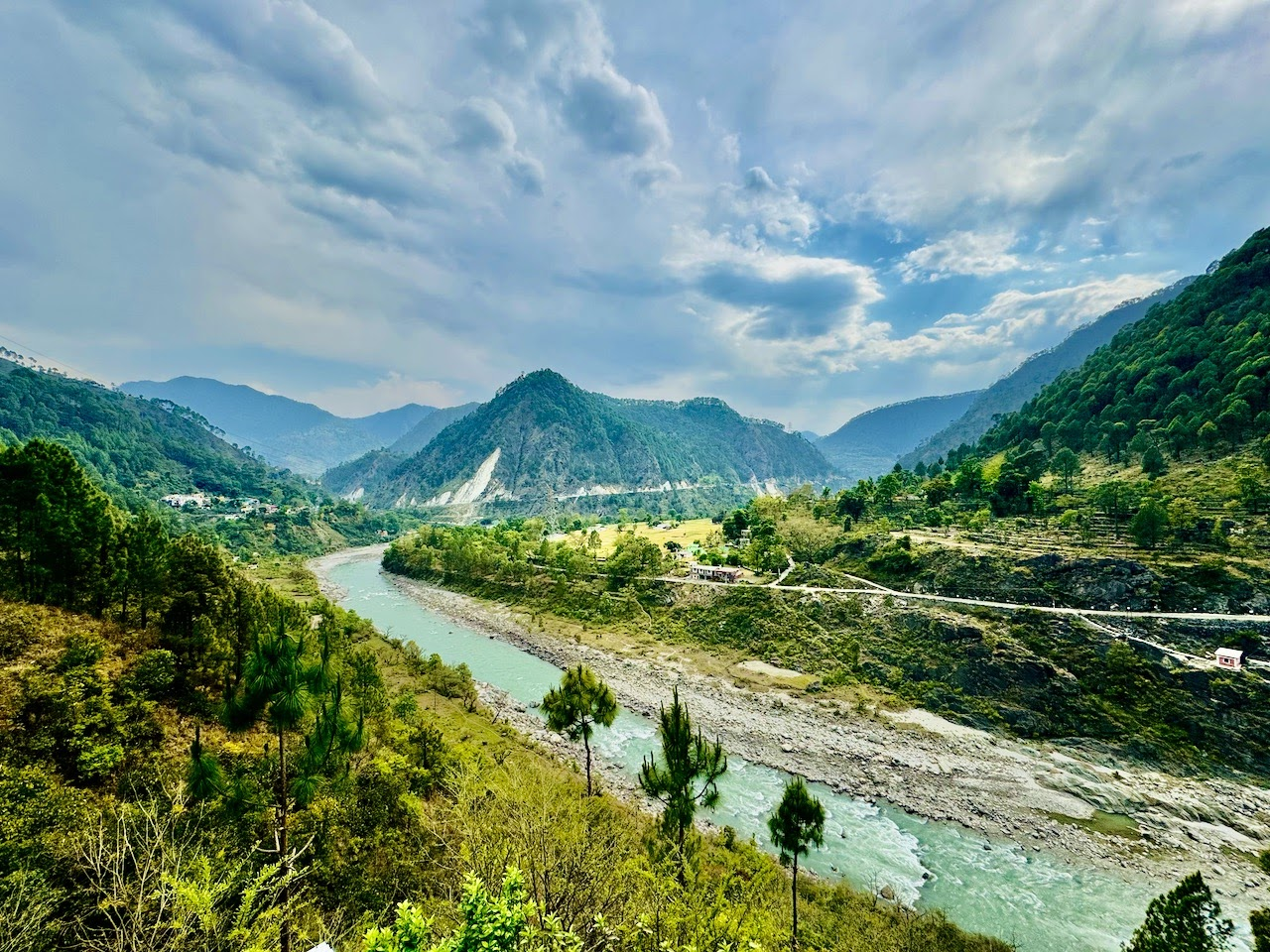
Resuming our journey, we took a major diversion at Karnaprayag. Our driver informed us that the roads ahead would become narrower, with sharper curves. The Alaknanda River, which had been our constant companion for a while, now gave way to the Pindar River. True to his words, the road was winding, and navigating the sharp bends was an experience in itself. While our driver’s speed wasn’t excessive by local standards, I asked him to slow down, feeling uneasy with the pace. Though he assured me there was no traffic on this stretch, those familiar with driving can understand the unease of being a passenger on such roads.
Shri Adi Badri Vishnu Temple
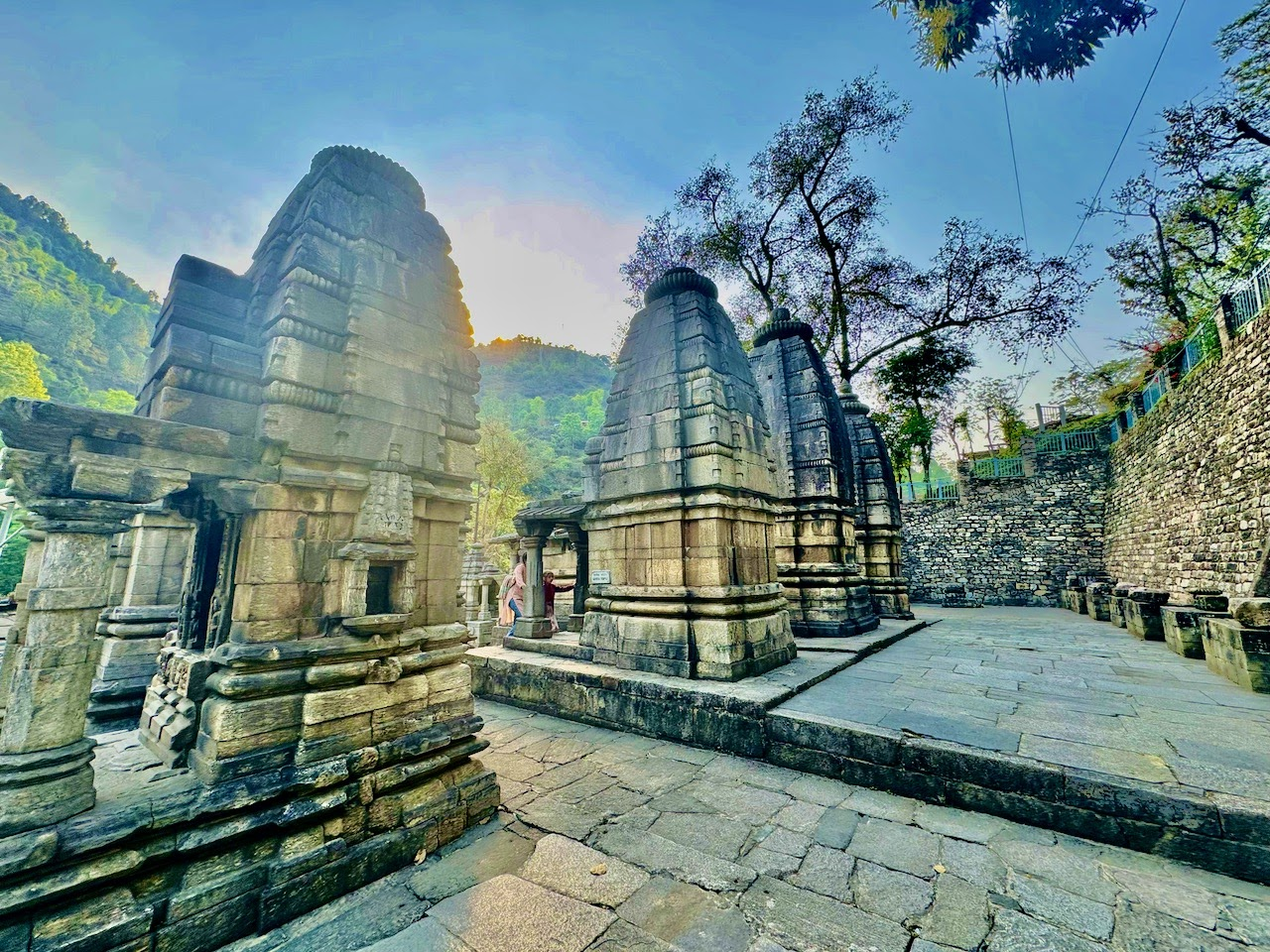
As we continued, we made an impromptu stop at the Shri Adi Badri Vishnu Temple in Adi Badri town. This temple, part of the revered Panch Badri, is significant as the “First Badri,” symbolizing its place as a precursor to the famous Badrinath Temple. The Panch Badri includes Badrinath, Adi Badri, Vridha Badri, Bhavishya Badri, and Yogadhyan Badri.
Believed to have been constructed during the Gupta period, this temple complex houses the main deity, Lord Badri Narayana, along with idols of Shri Lakshminarayan, Gaurishankar, Annapurna, Surya, Satyanarayan, Ganesha, Shiva, Garuda, Durga, and Janki. The serenity of the temple was amplified by the lush, green mountains forming its backdrop. It was both a spiritual and visual delight, providing a tranquil pause in our otherwise action-packed day.

Beautifully preserved temple under the care of ASI


Surrounded by lush greenery, A peaceful retreat.

Another view, with the sun setting behind—like a painting.
It was already 4:30 PM when we resumed our journey, with another 60-odd kilometers to cover. A quick tea break gave us just enough energy to push through, as none of us wanted to delay any further.
What a place to have tea, surrounded by lush greenery, perfect for gazing and relaxing.

By the time the clock struck 6, the surroundings were enveloped in near darkness, thanks to the dense vegetation and the approaching night. As we navigated the winding roads, flashing lights on the mountain slopes caught our attention. Straining our eyes, we realized those were forest fires, scattered across multiple spots—a sight both mesmerizing and alarming. The full scale of the destruction would only hit us a week later when we were back in Bangalore.
Eventually, we arrived at Chaukhutiya, a quaint little town that would be our halt for the night. Our stay was booked at Sangela Hotel & Restaurant, a modest establishment run by a mother and her son. The moment we arrived, a wave of anxiety washed over us. The room was incredibly basic, and the dimly lit surroundings did little to ease our nerves. Sensing our apprehension, the son, who seemed quite surprised to see us, reassured us that we were completely safe. He explained that he and his mother stayed at the hotel as well, which gave us a bit of comfort.
Dinner was served at the same place, a simple yet fulfilling meal that felt oddly homely. Noticing how unsettled we were, the son decided to stay in the room adjacent to ours, a gesture that we deeply appreciated. To distract ourselves and lighten the mood, we settled in to watch 83, a film about India’s historic cricket World Cup victory. The irony wasn’t lost on us: the previous night, we had been atop a pristine mountain, surrounded by solitude and served by resort staff. Now, here we were, staying in a remote town, reliant on the kindness of strangers.
This is the beauty of a road trip—no matter how much you plan, nature and circumstance have their own script. Over the past few days, we had experienced so many contrasts and learned so much, not just about the landscapes but also about ourselves. Gratitude filled our hearts as we thanked God for the safety and kindness we had encountered and retired for the night, ready for whatever awaited us next.
Despite the day’s challenges and the exhaustion from our hectic itinerary, sleep came quickly, aided by prayers for smoother days ahead.
To Be Continued…
 Varun's Travel Diaries
Wonderful writing and awesome pictures, wanting to add more but couldn’t find words.
LikeLike
Thank you Uncle, Very much encouraging.
LikeLike