Previously
Prologue: https://varunasok.com/2024/05/18/unraveling-uttarakhand-prologue/
Uttarakhand Diaries: Part 1: https://varunasok.com/2024/10/13/embarking-on-our-uttarakhand-adventure-from-dehradun-to-mussoories-heights/
Uttarakhand Diaries: Part 2: https://varunasok.com/2024/10/25/embarking-on-our-uttarakhand-adventure-from-serenity-to-chaos-a-journey-through-haridwar-and-rishikesh
Uttarakhand Diaries: Part 3: https://varunasok.com/2024/12/27/embarking-on-our-uttarakhand-adventure-from-rivers-to-peaks-a-journey-through-changing-landscapes/
Uttarakhand Diaries: Part 4: https://varunasok.com/2024/12/29/embarking-on-our-uttarakhand-adventure-from-snowy-summits-to-quiet-solitude-a-journey-through-auli/
Uttarakhand Diaries: Part 5: https://varunasok.com/2024/12/30/embarking-on-our-uttarakhand-adventure-from-sacred-temples-to-serene-landscapes-a-journey-through-jyotirmath-and-beyond/
Uttarakhand Diaries: Part 6: https://varunasok.com/2025/01/04/embarking-on-our-uttarakhand-adventure-nainital-unfolded/
April 14th, 2024
Today marked the beginning of our final descent from the mountains into the plains and forests — the last leg of our Uttarakhand journey, the Jim Corbett National Park. From the very start, this was one destination I didn’t want to skip, no matter how tight our schedule was. We had planned two nights here, hoping to end our trip amidst nature and wilderness.
After breakfast, we bid farewell to our lovely stay in Nainital. Surprisingly, the roads were quite empty — I had expected heavier traffic, but our driver mentioned that this wasn’t a route often taken by tourists from Delhi. As we drove through stretches of forested terrain, the misty air and tall trees brought back memories of Ooty and Kodaikanal — cool, calm, and serene.
Since we were early, we made a brief stop at the Jim Corbett Museum, a heritage site dedicated to Sir Edward James Corbett, better known as Jim Corbett. The museum beautifully showcases his life, work, and legacy through photographs, letters, and his personal belongings. One of the most fascinating displays was a detailed map marking the locations of the tigers he hunted across Uttarakhand.

After spending about 20 minutes exploring the museum, we resumed our drive. Crossing the Kosi Barrage (Ramnagar Dam), we noticed several open jeeps packed with people returning from the morning safari. The excitement in the air was palpable, though the noise, loud music and chaos reminded us how tourism sometimes takes away the forest’s peace.
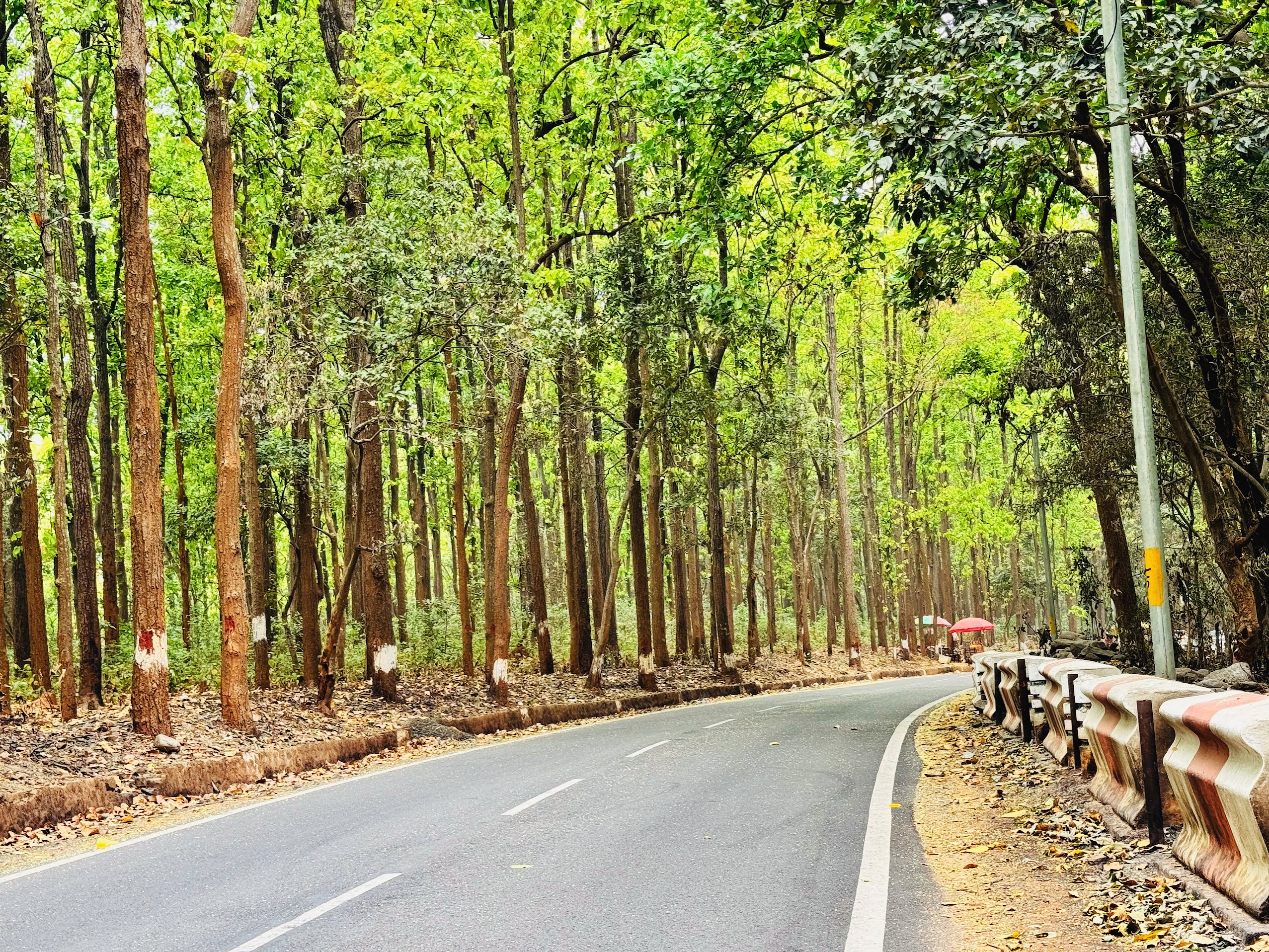
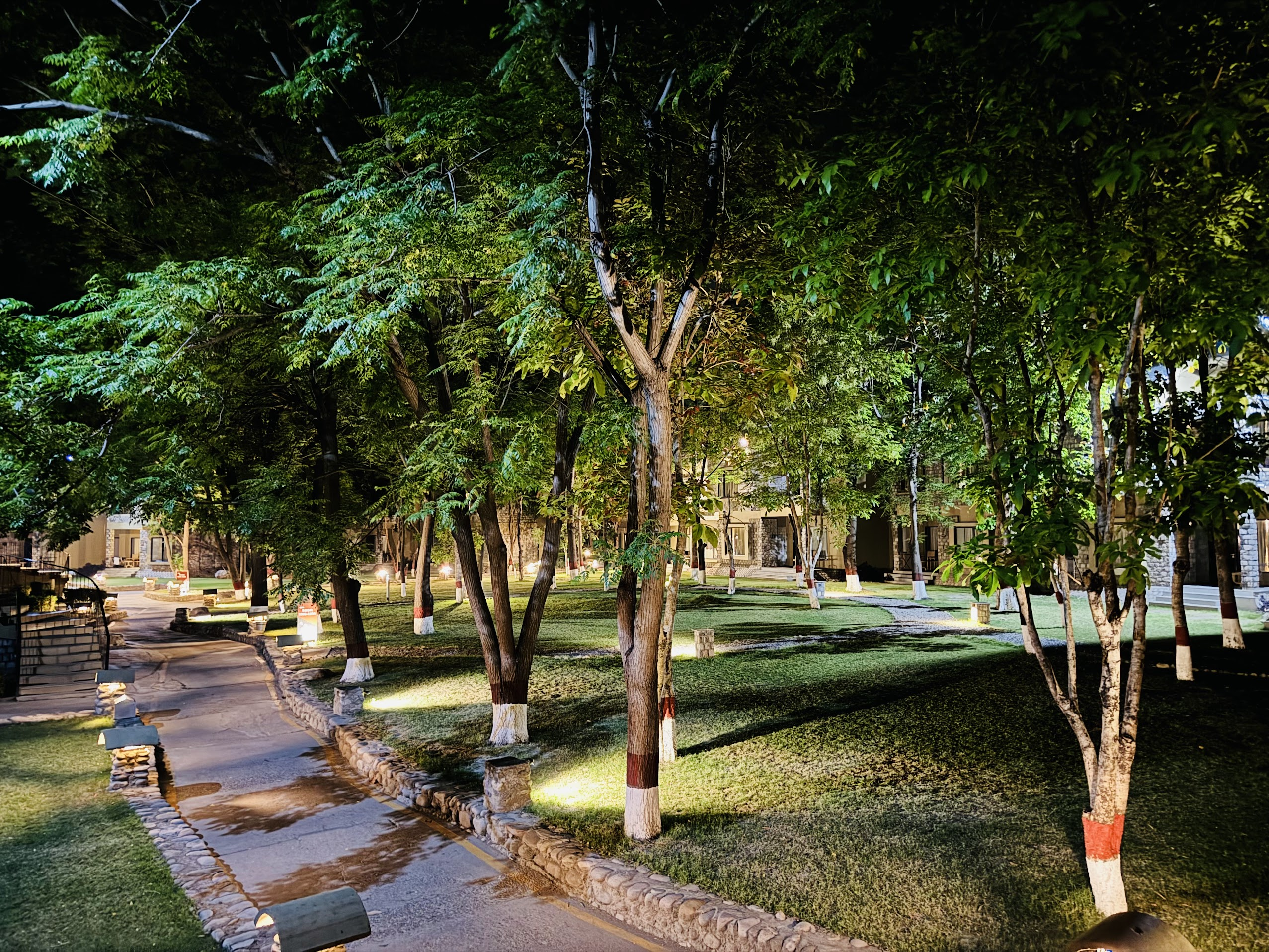
Our stay for the next two nights was at Club Mahindra Corbett, located deep within the forest zone. The moment we entered, all we could see was a vast expanse of greenery stretching endlessly on both sides. Our driver mentioned that just a couple of days ago, a tiger had leapt across this very road and taken down a full-grown cow before disappearing into the jungle — a vivid reminder that we were truly in tiger’s land.
Even with a few short breaks along the way, we reached well before check-in time. Since our rooms weren’t ready, we decided to enjoy a relaxed lunch at the resort restaurant. After days of parathas and chapathis, we treated ourselves to noodles and sizzlers — a refreshing change and absolutely delicious. With satisfied stomachs and a gentle forest breeze outside, we checked in once our rooms were ready and drifted into a peaceful afternoon nap.
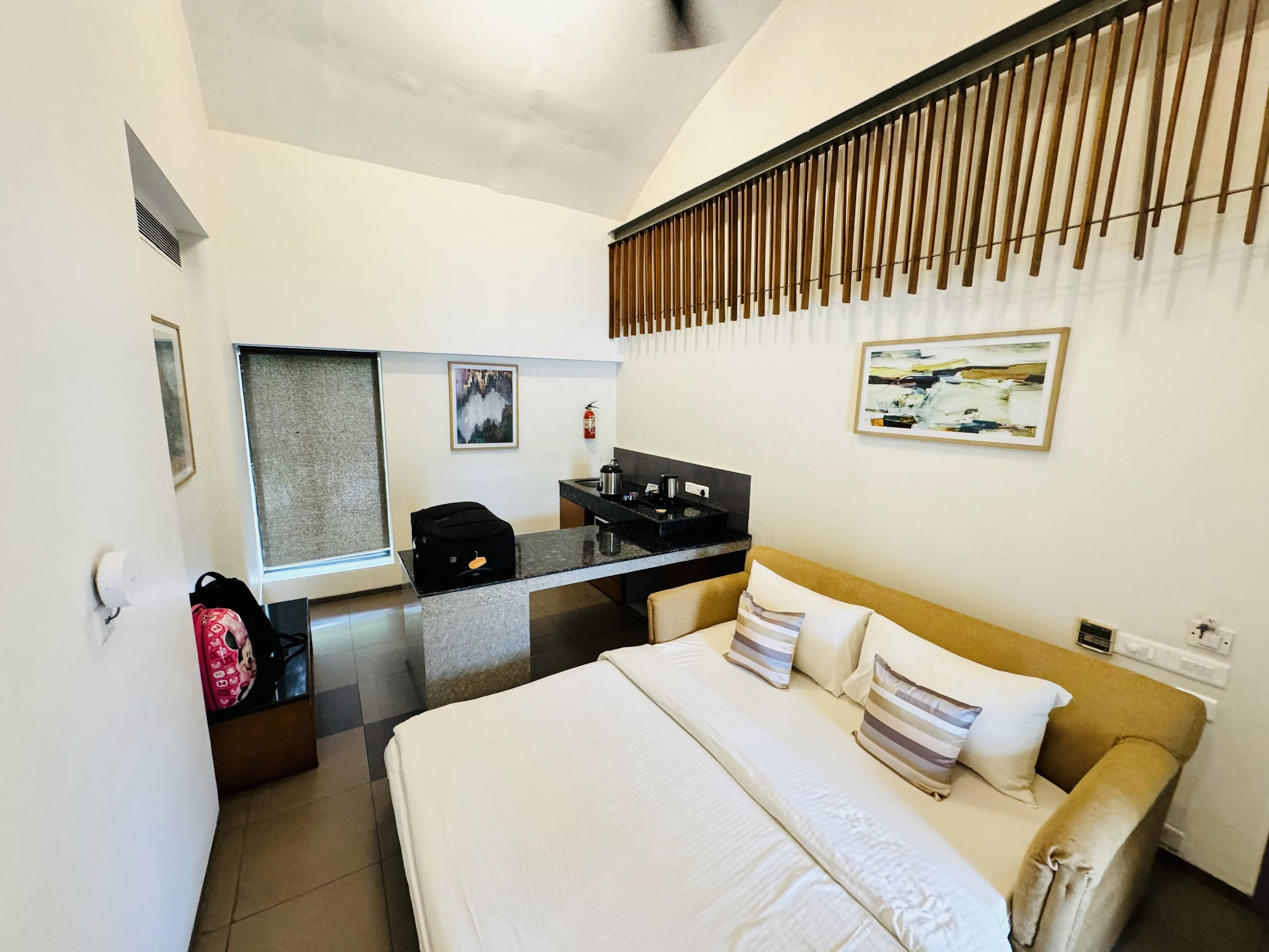
View from our room
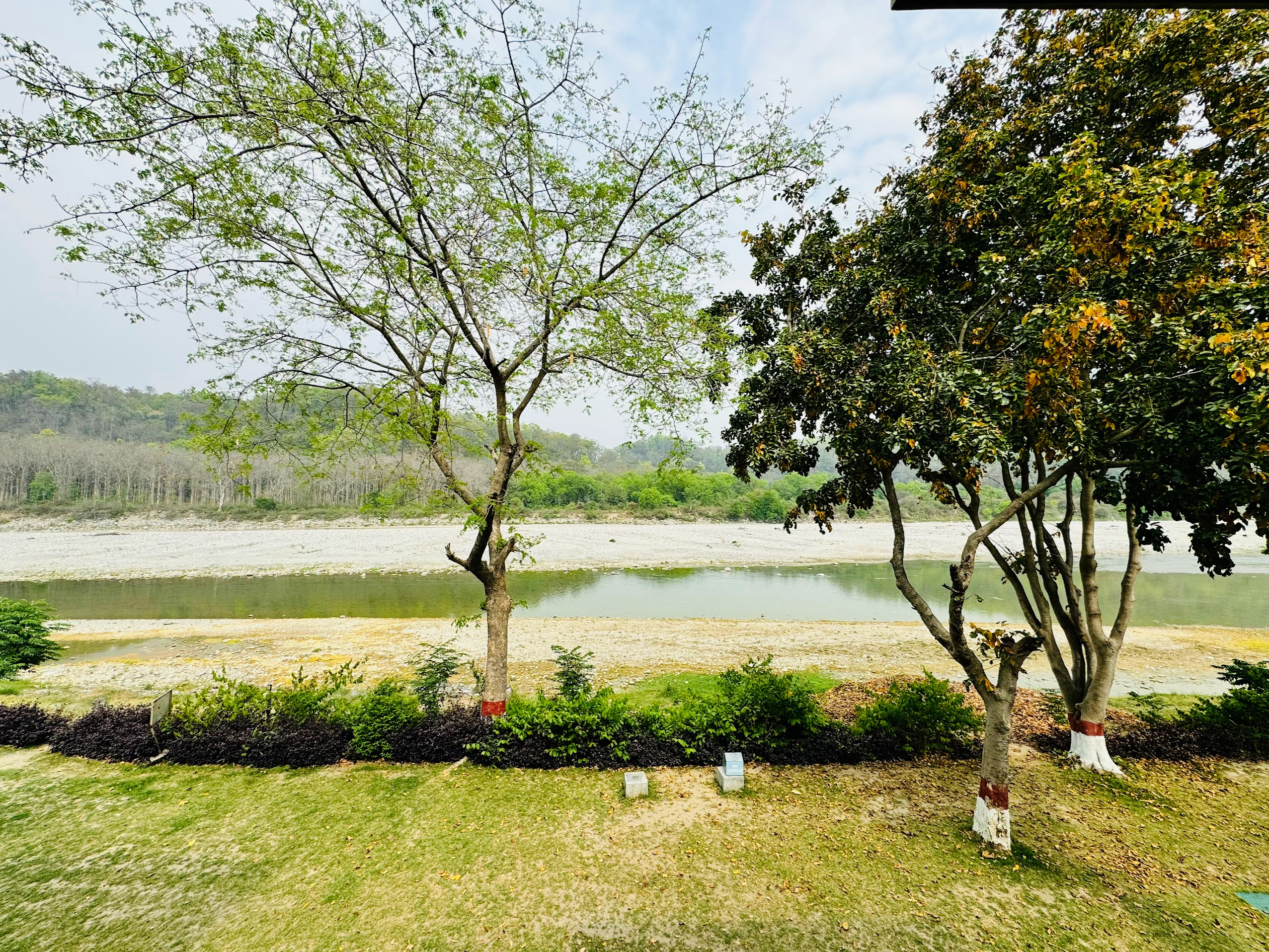
In the evening, we took a short stroll to the nearby Kosi River stream. Like many mountain-fed streams, its water was icy cold and crystal clear, flowing gently through smooth pebbles and rocks. My daughter spent a long time by the banks, tossing stones into the stream, competing with herself to see if she could reach the opposite side.
View of our room from the Kosi River

The beautiful, gently flowing Kosi river.

Back at the resort, the atmosphere was lively — a stark contrast to the solitude of Auli. Guests were mingling around the lawns, music played softly, and the entire place felt festive. Later, we headed to Ramnagar town to withdraw some cash and coordinate our safari arrangements. We requested our jeep driver to pick us up directly from our room the next morning instead of meeting him at the main gate — for which we had to pay an extra ₹1000, but it was worth the convenience.
By now, we had also developed a fondness for Tandoori chai, and we couldn’t resist stopping at a roadside stall to enjoy a couple of cups. The warmth of the tea against the cool evening air was simply perfect. Before heading back, we picked up a few souvenirs and a couple of cute dresses for my daughter. As we stepped out, the festive hum of the resort slowly faded, replaced by the eerie calm of the forest — that peculiar stillness that only deep woods can offer.

Our safari tickets had been booked 45 days in advance, as they tend to sell out quickly. Having had an incredible experience at Gir, where we were lucky enough to spot six majestic lions, I didn’t want to leave anything to chance here. I had opted for two safaris, both in the Bijrani zone (out of 4 zones) — figuring that if luck didn’t favor us once, maybe it would the second time.
There are also overnight stay options inside some of the safari zones, but considering factors like electricity, accessibility, and safety, we decided against it. Before retiring for the night, we confirmed with our driver that he would be waiting at the parking area early in the morning. Back in our resort, we enjoyed a hearty dinner, complete with some desserts. We also overheard an excited group mentioning a tiger sighting that very evening in the Bijrani zone — that only added to our anticipation. With that thought lingering in our minds, we called it a night, hoping for a day full of adventure and luck ahead.
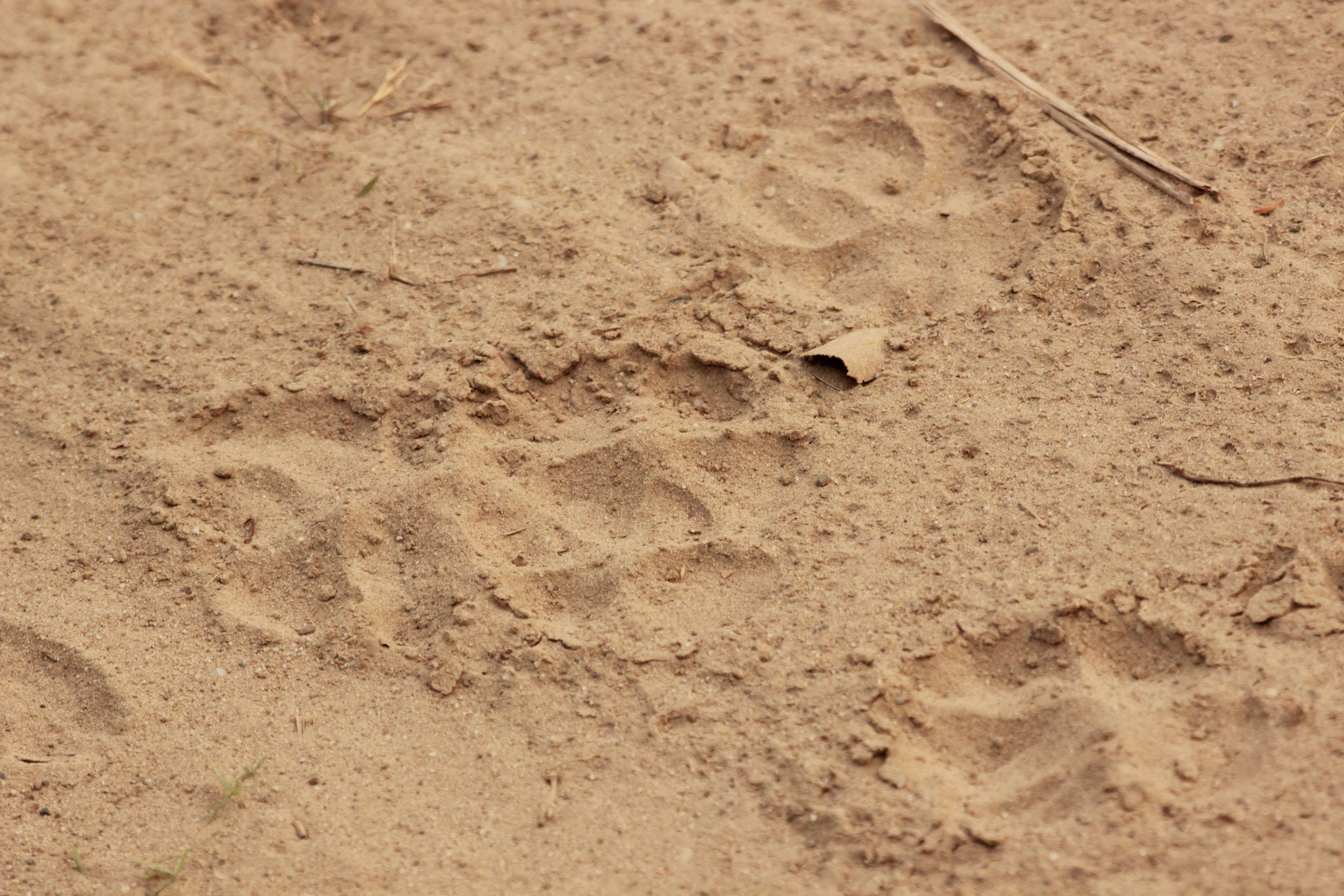
The alarm buzzed around 4 AM, as was my customary routine, I took a hot shower and got ready. Bang at 5 AM, the driver called as I was walking towards him. We greeted each other, I also carried some biscuits, reaching the gate, we took almost 20 minutes with lot many more jeeps giving us company. The gates were expected to open only at 6 AM. We were already 8th or 9th in the queue. I took a cup of tandoori chai and waited patiently. Once gates opened, they checked each one of our identities and let us in. Jeeps roared into the buffer zone first. Driver was quick with all his stories that nowadays people get to see a lot of sightings in the buffer than in the actual area. Soon enough we saw a bunch of huge pug marks leading to a stream. But no, we did not see him. We had to cross the stream now in the Jeep. This interested me as the driver beautifully engaged the 4×4 and gained traction. The buffer itself was quite big and we travelled close to 6 Kms.
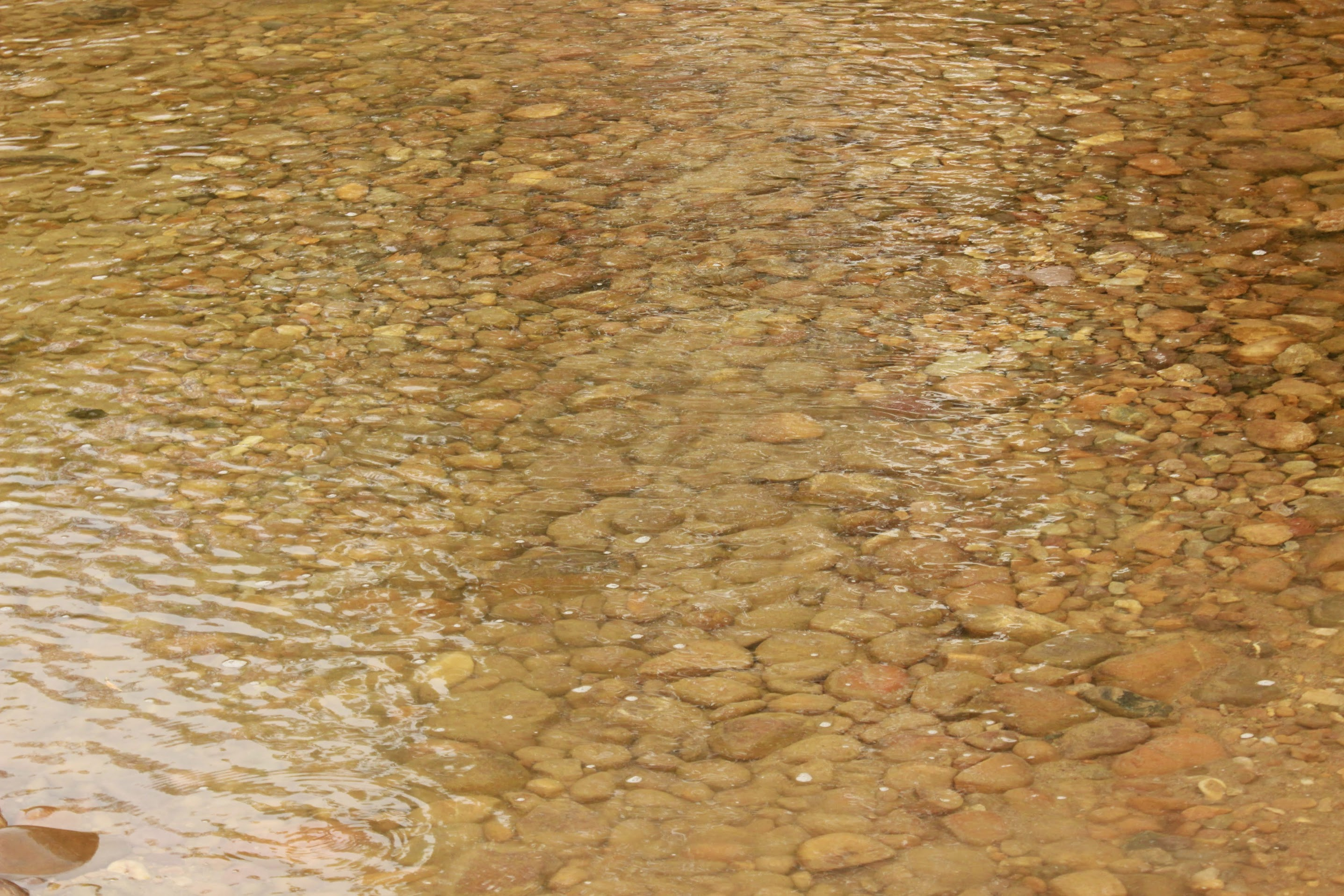
The stream which we crossed to get into the actual forest
Soon, we reached the rest area inside the Bijrani zone, nestled deep within the buffer region — nearly 6 kilometers inside the forest. It was fascinating to think that people actually stayed there, right in the heart of wilderness. I was told that electricity is available only till around 6 or 7 PM, after which guests rely on fire lanterns. However, spotting a few solar panels around made me wonder if that information was slightly outdated. The area was surrounded by electric fencing to prevent animals from straying too close, yet the thought of being so deep in tiger territory was both thrilling and eerie.

This was the designated bio-break stop, and everyone got down to stretch their legs. A tall watchtower stood nearby, offering a panoramic view of the vast, dry forest that stretched endlessly into the horizon. My daughter and I climbed up, and from the top, we could truly grasp the scale of the wilderness — a sea of parched trees, golden under the morning sun, with a backdrop of low-lying hills. Our guide mentioned that this zone alone is home to around six to seven tigers, apart from countless deer, and other species.
From the top of the watch tower

As we resumed our safari, the forest suddenly grew tense. The driver slowed down and switched off the engine — the telltale sign of a tiger call. In the stillness, we could hear the alarm calls of deer echoing through the forest. Within seconds, multiple jeeps converged at the same spot, everyone waiting silently, eyes scanning the thickets. The air was thick with anticipation.
For the next twenty minutes, we waited — watching anxious deer, fluttering birds, and every rustle in the bushes with hope. But the tiger never emerged. It was one of those moments of dilemma — do we stay longer and risk missing something elsewhere, or move on and hope to spot the big cat in another part of the jungle? Eventually, we decided to take our chances and explore further, holding on to the hope that the forest still had surprises waiting for us.
Live to drive

Soon enough, we fell upon these golden jackals and looks like they are quite unique and curious looking at us. Since we were one of those, who left the tiger sighting to the last, no other jeep was there to compete with us. We also fell upon the twins and the driver explained to us, they roam in packs. Man, they can easily camouflage themselves amidst all those golden grasses.
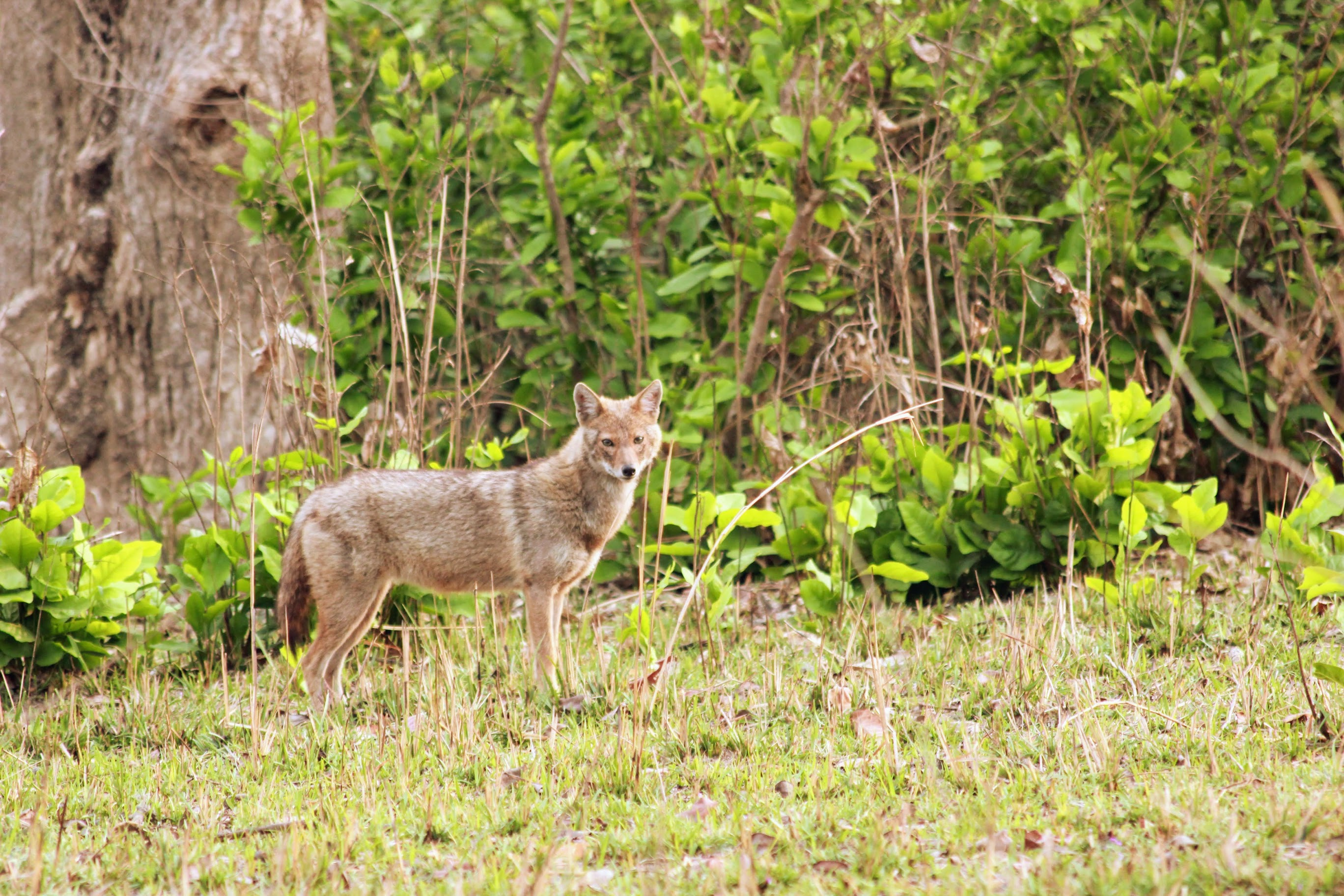
The twins !!!


Red-Wattled lapwing: They are ok to pose for photographs.

Spotted Deer: Nope, we are not planning to harm you in anyway

Nilgai: The female ones, We found a lot of them in the Gir forest. These are very small in size when compared to the ones in Gir.

A beautiful peacock: Standing upon the tree

Another one, on the tree branches

But yes — you guessed it right. We saw peacocks gracefully spreading their feathers, golden jackals darting through the bushes, herds of deer grazing cautiously, and majestic nilgais blending beautifully into the dry forest. But the most elusive one, the reason everyone comes to Corbett — the tiger — remained unseen.
As the clock ticked, we began our return journey through the forest. There was a small stream crossing on the way back, and our driver, ever hopeful, stopped there for nearly fifteen minutes, scanning both sides for any movement. The air was still, except for the sound of birds and the gentle flow of the water. But no, luck wasn’t on our side today. With the sun climbing higher, we decided to call it a wrap for the morning safari.
On the way back, the driver kept telling me, half in jest and half serious, that I should have tried a different zone for the second safari — “Sir, Bijrani is good, but you need luck here,” he smiled. Fair point. Back at our resort, we learned from another group that even their zone had no sightings that morning. So, perhaps it was just one of those quiet jungle days.
We had lunch and recharged — both ourselves and my camera battery — before the afternoon safari. This time, I decided to skip the pick-up from the resort and instead asked our driver to drop us at the gate since we now knew the route and process better. The sun was already intense, and the forest wore a different look — more golden, more alert.
At the gate, we had a quick cup of tea before our jeep arrived. Interestingly, we were joined by two forest officials, young women probably in their early twenties, who requested a lift. We gladly welcomed them aboard, feeling a quiet sense of pride in being part of something that protected the wilderness.
The forest officials — or rather, the guards — told us that their posting was deep inside the forest, and they would be staying there for the next three weeks, armed only with their rifles. It was both fascinating and humbling to hear how they protect the jungle from poachers with such limited resources. This time, I told our driver to zip through the buffer zone, as I wasn’t too keen on scanning pugmarks again.
A few minutes in, we finally saw some monkeys, surprisingly rare here despite being so common back in southern India. The usual suspects followed — spotted deer grazing in herds, nilgais standing tall and calm, and peacocks displaying their colors under the fading afternoon sun.


After about five to six kilometers deeper into the zone, we reached the spot where the guards had to get down. That’s when I noticed — our mobile networks had completely vanished, a silent reminder of how remote this place really was. Their makeshift post was barely protected by a thin barbed wire fence, yet they stood there with quiet courage, ready to guard the wilderness for weeks at a stretch.
Our driver then asked if we’d like to climb up the mountain trail. We had taken a similar detour that morning — about six to seven kilometers long — and though the chances of spotting anything were slim, the terrain itself was mesmerizing. I told him, “Let’s go for it again.”
And then, it happened.
Barely two kilometers uphill, a huge tiger leapt right across our path, descending from a 10-foot cliff and landing just a few meters ahead of our jeep. Its tail held high, it walked majestically past us, completely unfazed by our presence. We were stunned into silence — it all happened in a flash, maybe just three to five seconds — but those few seconds were nothing short of extraordinary.
Our hearts raced; my daughter gasped. We had no other vehicles around, just the five of us — three adults and one kid — and the mighty tiger, moving gracefully into the wild. By the time I thought of reaching for my camera, it had already disappeared down the mountainside.
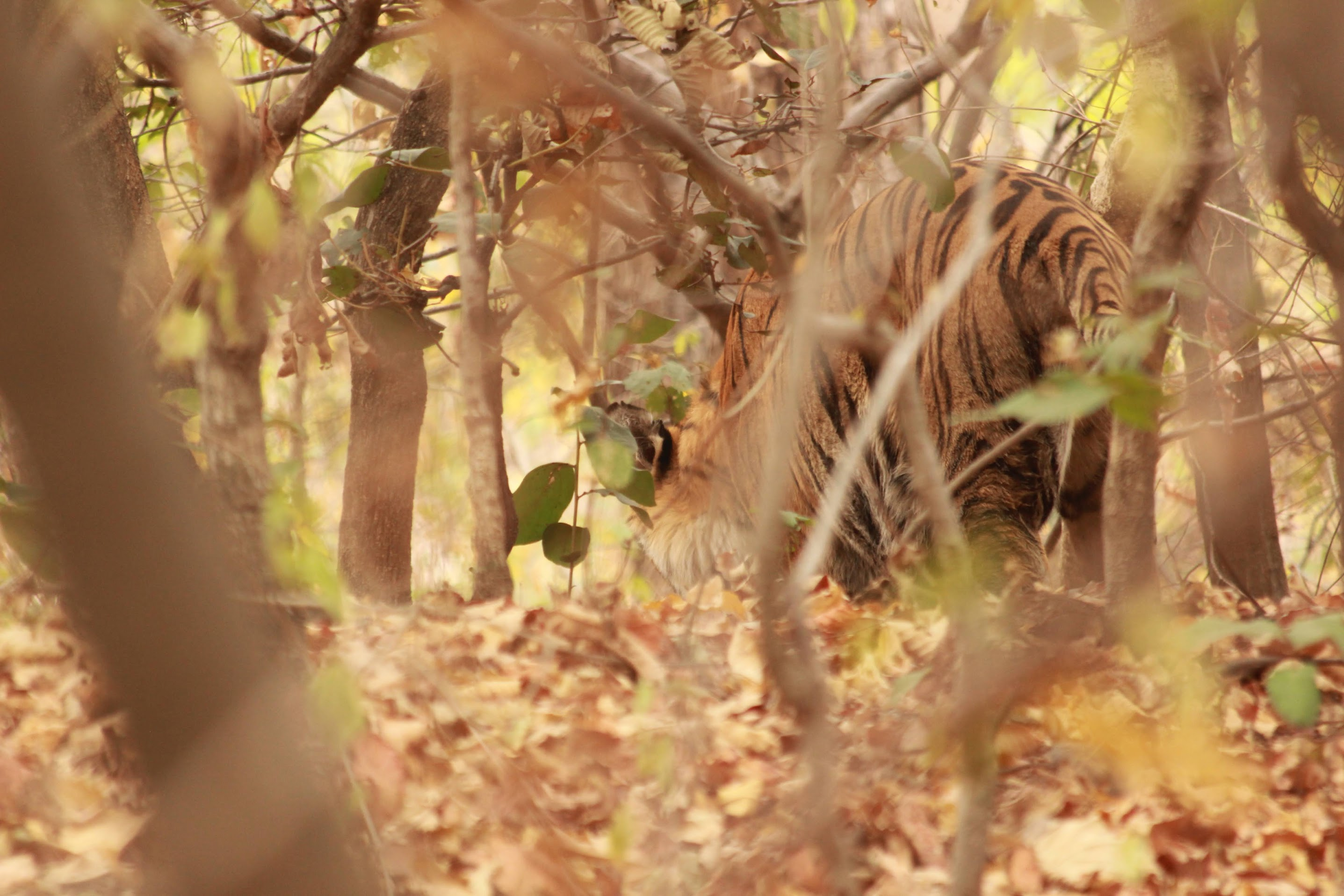
When I asked our driver how long it would take to circle down to the lower ghat, he said it would be about three kilometers — the tiger would be long gone by then. And in that moment, I realized something profound: not every moment needs to be captured. Some are meant to be felt, to be etched forever in our memory rather than in pixels.
For the next five minutes, none of us spoke about anything else — just the tiger, and how it made the entire journey worth every mile.
Having finally seen the most elusive cat of the wild, I felt a deep sense of peace wash over me. I told our driver to take it easy, assuring him that even if the light began to fade, we could move slowly and simply enjoy watching the other animals.
A mom is a mom, irrespective of creatures
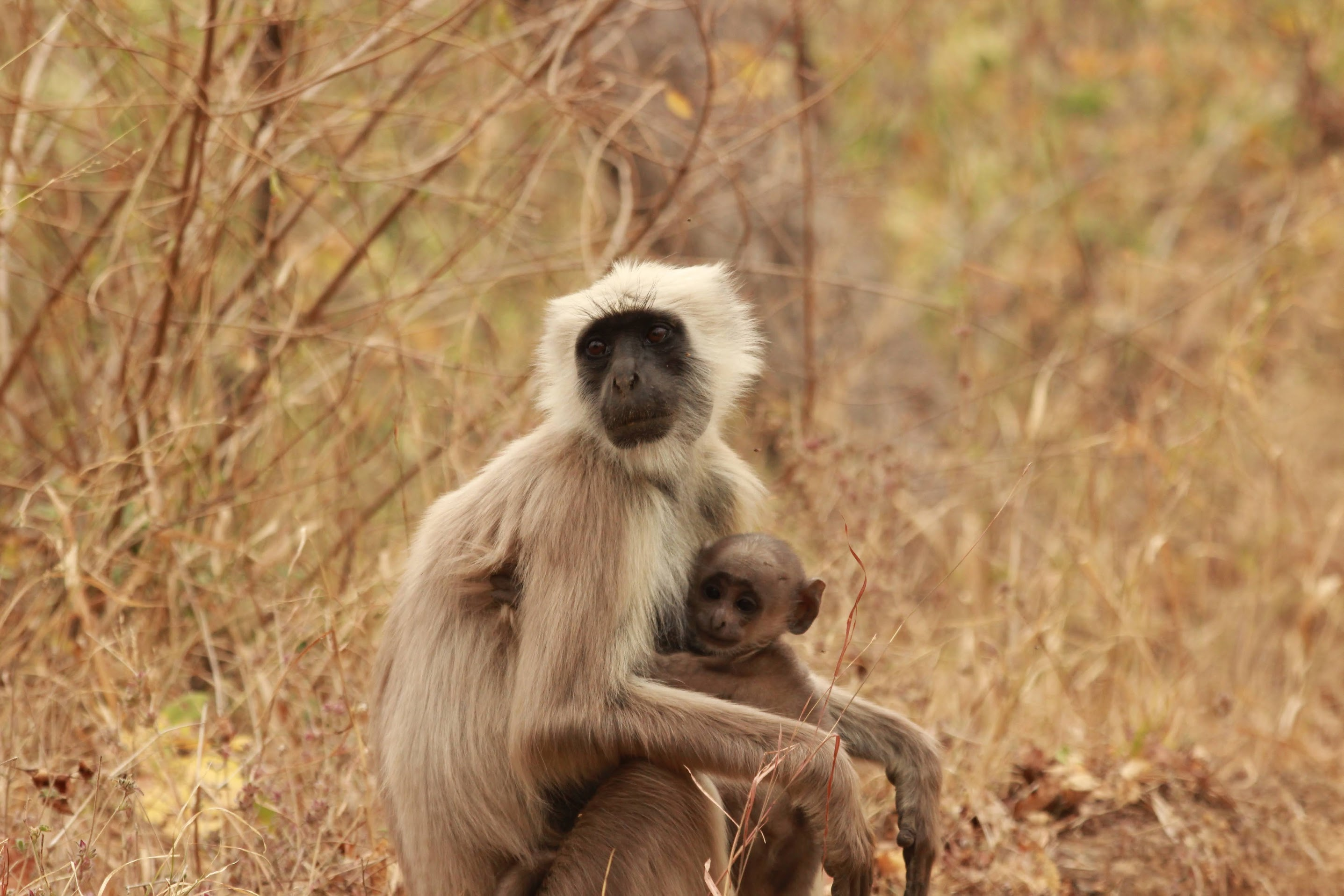
A little ahead, we spotted a few monkeys scampering around and then a herd of wild boars. Unlike the smaller, scruffy ones often seen near towns or highways, these were massive, muscular, and moved in tight groups.
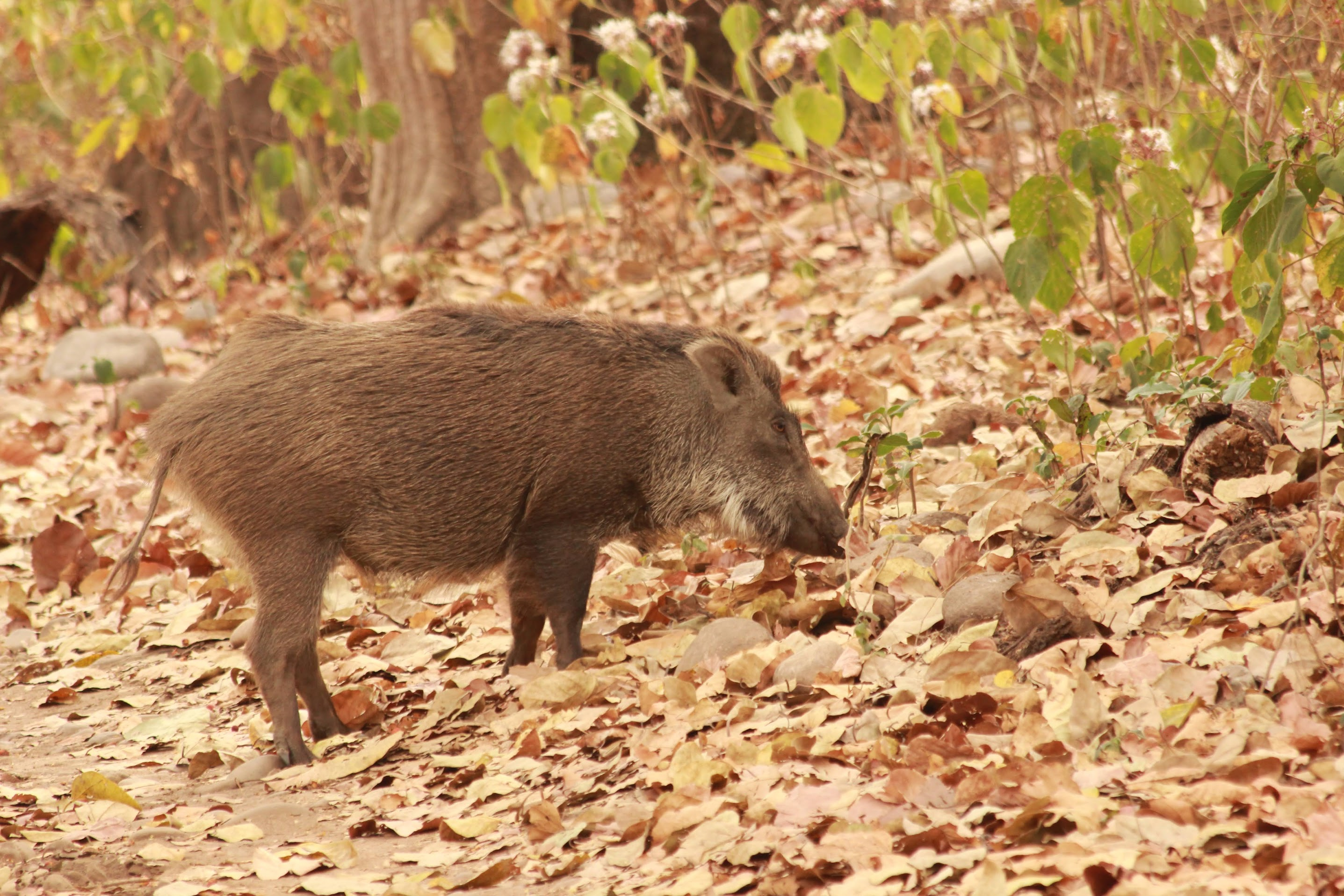
Our driver mentioned that while tigers do hunt them occasionally, they usually prefer larger prey such as nilgais and deers.
After circling around for another 7–8 kilometers, we reached back toward the main forest zone. It was only then I truly appreciated how vast and rugged the mountainous terrain was — no wonder sightings here are very rare and why people avoid this stretch. Still, I was glad we had chosen this path; the thrill and beauty of it made the experience even richer.
As dusk approached, we began to exit the forest and enter the buffer zone. Just then, another jeep sped past us, the passengers shouting, “Tiger! Tiger!” Before we could even process it, our driver slammed the accelerator, racing down the dirt road. I had no clue how these drivers exchanged information — there were no radios or walkie-talkies — yet somehow, they always knew where the action was.
I kept asking him in my broken Hindi if he knew the exact spot. He simply smiled and said, “Haan sir, pata hai.” Sure enough, when we reached the area, several jeeps were already lined up. At first glance, I couldn’t spot anything; the dense vegetation made it nearly impossible. But our driver quickly maneuvered off the main track, onto a rough patch, and whispered, “Sir, look up.”
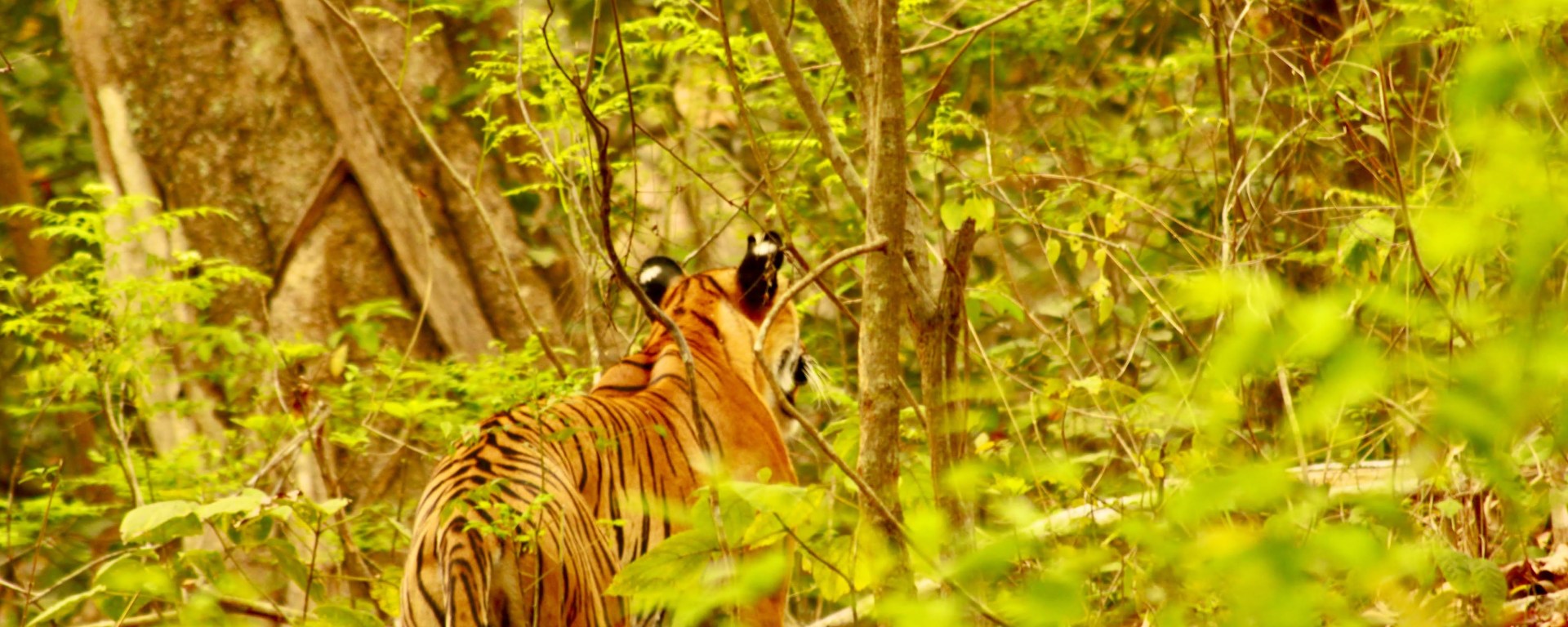
And there it was — the tiger, sitting majestically with its back facing us, half-hidden in the tall grass. The moment was electric. Some jeeps tried to reposition for a better view, while others gave up and drove off. But we decided to stay put, quietly observing.
No wonder !! Other Jeeps decided to move out. This was how we first saw it.
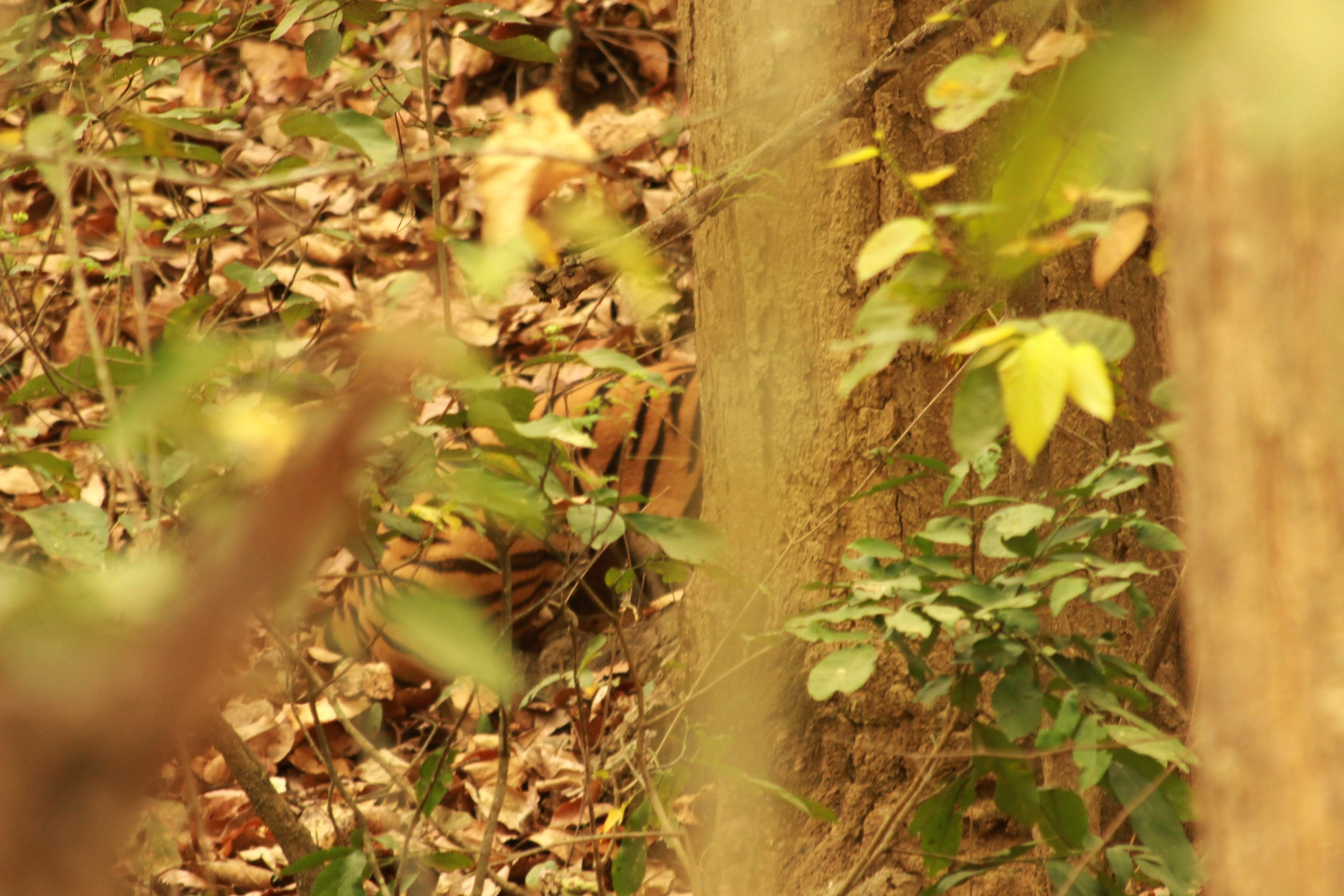
After about seven or eight long minutes, the tiger suddenly stood up and began to walk, revealing its full, magnificent frame.
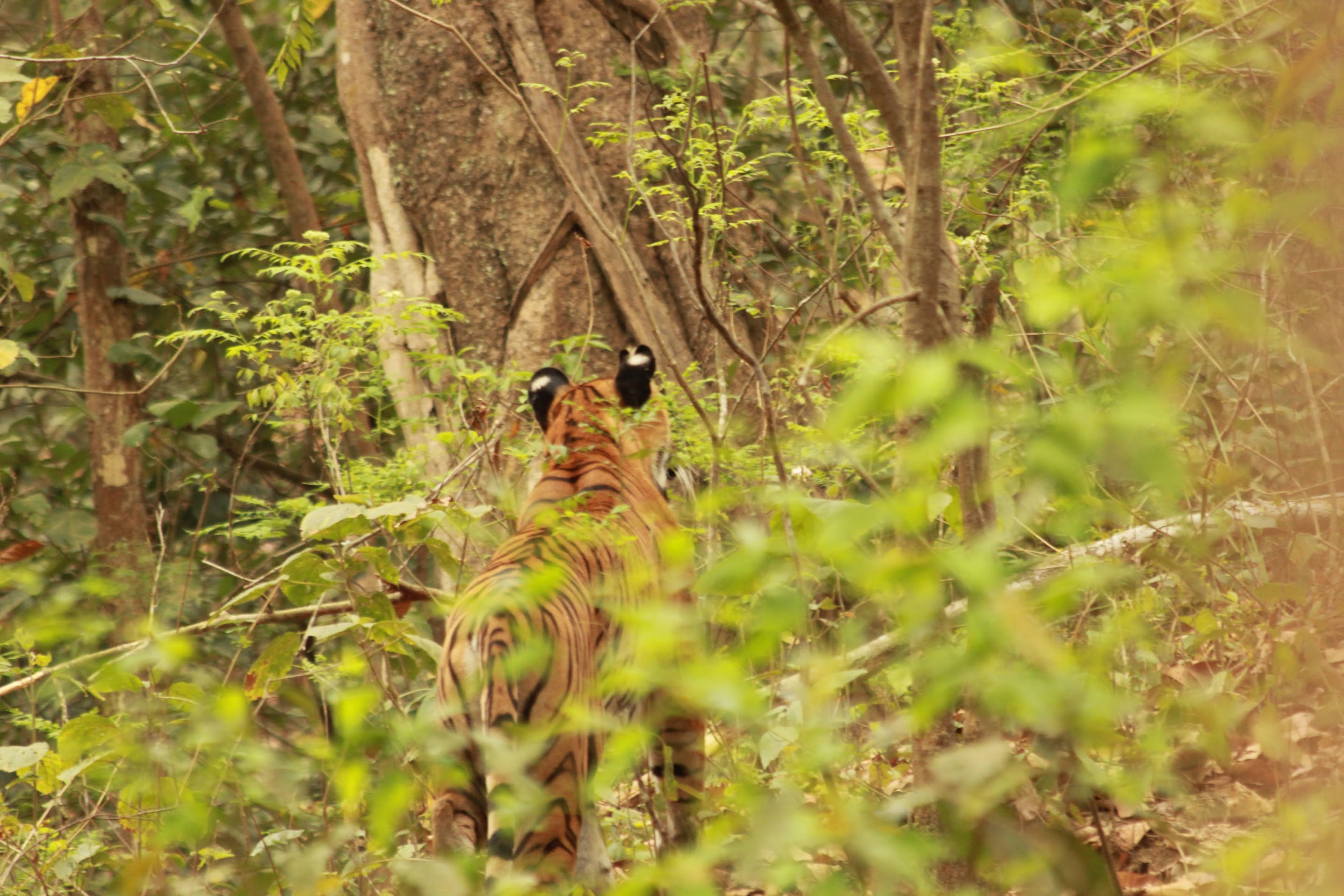
Though it never turned toward us, we could clearly see its massive shoulders, rippling muscles, and graceful stride. I managed to capture a few shots — mostly from the back — but I didn’t mind at all.


Between this sighting and the earlier one where the tiger leapt right before our jeep, I felt utterly fulfilled.
My hunch had worked — sticking to the same zone twice had indeed paid off. The day ended with the satisfying realization that sometimes, patience and persistence in the wild bring rewards that no camera can truly capture.
We returned to our room overjoyed and content, still replaying the thrilling tiger encounters in our minds. Since this marked the final night of our Uttarakhand adventure, we decided to celebrate with a hearty dinner.
Knowing we had an early start the next morning to catch our flight from Dehradun, we packed most of our bags that night, leaving only our clothes for the next day. We were up early, freshened up, and collected our packed breakfast from the resort — planning to eat it along the way. Our driver, ever punctual and reliable, assured us that if we started by 7 AM, we’d comfortably reach by noon, well in time for our 2 PM flight.

The drive was smooth, with a short tea break midway, and as promised, we reached the airport a little after 12. Having experienced the airport’s easy check-in and security procedures on our arrival, we knew the process would be quick. What we didn’t anticipate, though, was the scarcity of good food options — apart from a few cold cakes, there was hardly anything edible.
Still, nothing could dampen our spirits. We boarded our flight, reached Bangalore around 7 PM, and finally made it home by 9 PM — tired, happy, and filled with memories.
And just like that, our 14-day Uttarakhand journey — from the serene slopes of Auli to the wild trails of Corbett — came to a beautiful, satisfying close.
Epilogue
When I look back, each destination feels like a distinct chapter in a larger story — Mussoorie’s charm, Haridwar’s chaos, Auli’s solitude, Nainital’s vibrance, and finally, Corbett’s wild heartbeat. Together, they taught us that travel isn’t just about the places we see, but the emotions we collect along the way — the thrill of discovery, the quiet joy of shared moments, and the humbling beauty of nature in all its moods.
Our 14-day journey through Uttarakhand wasn’t just a trip; it was a gentle reminder that life, much like the mountains, is full of climbs, curves, and breathtaking views awaiting us at every turn. And now, as I hold my new born daughter in my arms, I realize — the best adventures aren’t always on the road, some begin right at home.
As I finally sit down to complete this last leg of our Uttarakhand journey — almost a year after we set out on it — life feels like it has come full circle. What began as an adventure through misty hills, sacred rivers, tranquil lakes, and untamed forests has now found its most precious continuation in the arrival of our little tigress, born in March, exactly a year later. Perhaps it is fitting that her birth delayed this final chapter — after all, every great story deserves a beautiful pause before its perfect ending.
 Varun's Travel Diaries